
Tracing Worksheets for Nursery: Easy Printable Pre-Writing Activities (2026)
Cover lines, curves, big loops, patterns, and beginner path tracing to help nursery-age children develop pencil control and pre-writing confidence. Complete 2026 guide.
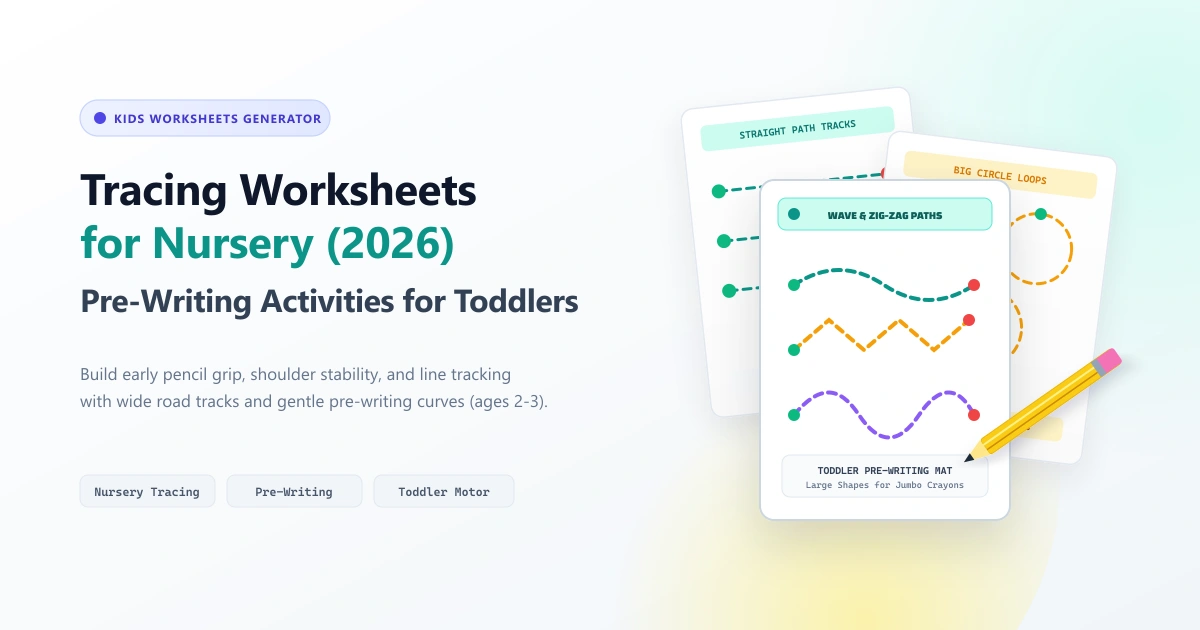
Tracing worksheets for nursery children aged 2 to 3.5 years establish the foundational gross-motor control, shoulder stability, and pincer pencil grip needed long before formal alphabet handwriting begins. In 2026, occupational therapy and early childhood education studies confirm that toddlers who engage in 8 to 12 minutes of structured daily pre-writing path tracing show up to a 44% faster transition from whole-hand palmar grasps to functional 3-finger tripod grips compared to children who start directly with small letterforms. By following wide road tracks, gentle wave curves, big circular loops, and horizontal dash lines, nursery learners build finger dexterity and hand-eye coordination in a playful, low-pressure format.
In this article
- How Do Nursery Tracing Worksheets Build Early Hand Stability and Grip?
- What Pre-Writing Line Formations Should Nursery Children Master First?
- What Makes an Age-Appropriate Nursery Tracing Worksheet?
- How Can Parents and Daycare Educators Generate Custom Nursery Tracing Books?
- Sensory Tracing Alternatives: Finger Paint, Playdough Mats, and Dry-Erase Sleeves
- Final Verdict
- Frequently Asked Questions
How Do Nursery Tracing Worksheets Build Early Hand Stability and Grip?
Toddler hand development follows a strict proximal-to-distal trajectory, meaning motor control develops first in the shoulder and upper arm before progressing down to the elbow, wrist, and individual fingertips. Forcing a 2-year-old to write tiny alphabet letters forces unnatural finger cramping because their intrinsic hand muscles have not yet matured.
Age-appropriate nursery tracing worksheets support healthy physical development across four key biomechanical stages:
- Shoulder and Elbow Guidance: Wide-path horizontal and vertical lines encourage large, fluid arm movements that strengthen upper body stabilizing muscles.
- Palmar to Digital Pronate Transition: Holding thick jumbo crayons or ergonomic triangle pencils naturally shifts a toddler away from a full fist grasp toward an angled, four-finger grip.
- Crossing the Visual Midline: Tracing long horizontal lines from the far left of the page to the far right trains the eyes and hands to cross the body's midline, a crucial milestone for reading fluency.
- Spatial and Boundary Awareness: Keeping writing tools inside wide, shaded road tracks teaches toddlers how to calibrate hand pressure and regulate drawing speed.

Create customizable pre-writing line tracing sheets, wide-path toddler workbooks, and nursery printables in seconds.
What Pre-Writing Line Formations Should Nursery Children Master First?
Developmental psychologists establish that children learn stroke paths in a predictable sequential order based on physical complexity:
| Stroke Formation | Motor Complexity | Typical Starting Age | Visual Cue Strategy |
|---|---|---|---|
| 1. Vertical Downward Drops | Top-to-bottom downward pull | Age 2 to 2.5 years | Raindrops falling from clouds to flowers |
| 2. Horizontal Tracking Lines | Left-to-right lateral tracking | Age 2.5 to 3 years | Car driving on a road toward a garage |
| 3. Big Circular Loops | Continuous counter-clockwise curve | Age 3 years | Balloons, bubbles, and wheel outlines |
| 4. Wave and Curved Paths | Continuous wrist rotation and flow | Age 3 to 3.5 years | Ocean waves and swimming fish trails |
| 5. Diagonal Slashes & Crosses | Angle redirection and intersection | Age 3.5 to 4 years | Mountain peaks and rocket takeoff paths |
What Makes an Age-Appropriate Nursery Tracing Worksheet?
Worksheets designed for kindergarteners or older preschoolers can overwhelm nursery toddlers. To keep early tracing fun and accessible, nursery materials require tailored graphic specifications:

1. Extra-Wide Road Tracks (10mm to 15mm Width)
Instead of single thin dashed lines, nursery sheets use wide shaded pathways with distinct borders, giving toddlers space for hand wobble without feeling like they made a mistake.
2. High-Contrast Start and Finish Markers
A green starting circle and a red checkered finish flag provide clear visual boundaries that teach children where to place their crayon and when to stop.
3. Spacious Layout (Max 3 to 4 Paths Per Page)
Limiting each worksheet to 3 or 4 large, spacious lines prevents visual clutter and allows toddlers to feel a sense of completion in just 2 to 3 minutes.
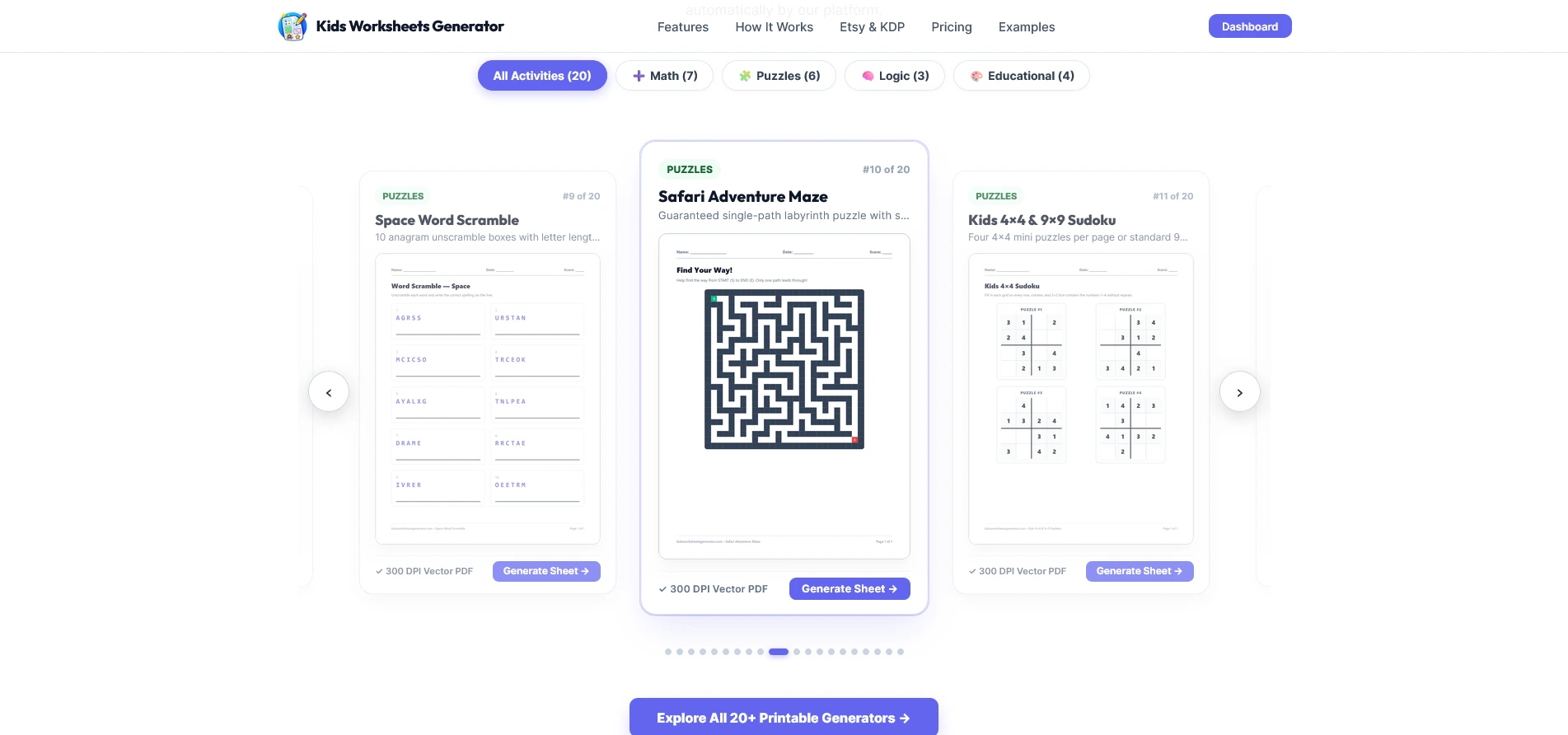
Assemble complete nursery pre-writing packets, toddler line tracing books, and daycare activities in minutes.
How Can Parents and Daycare Educators Generate Custom Nursery Tracing Books?
Modern worksheet software makes it easy to produce custom toddler tracing books tailored to specific developmental phases:
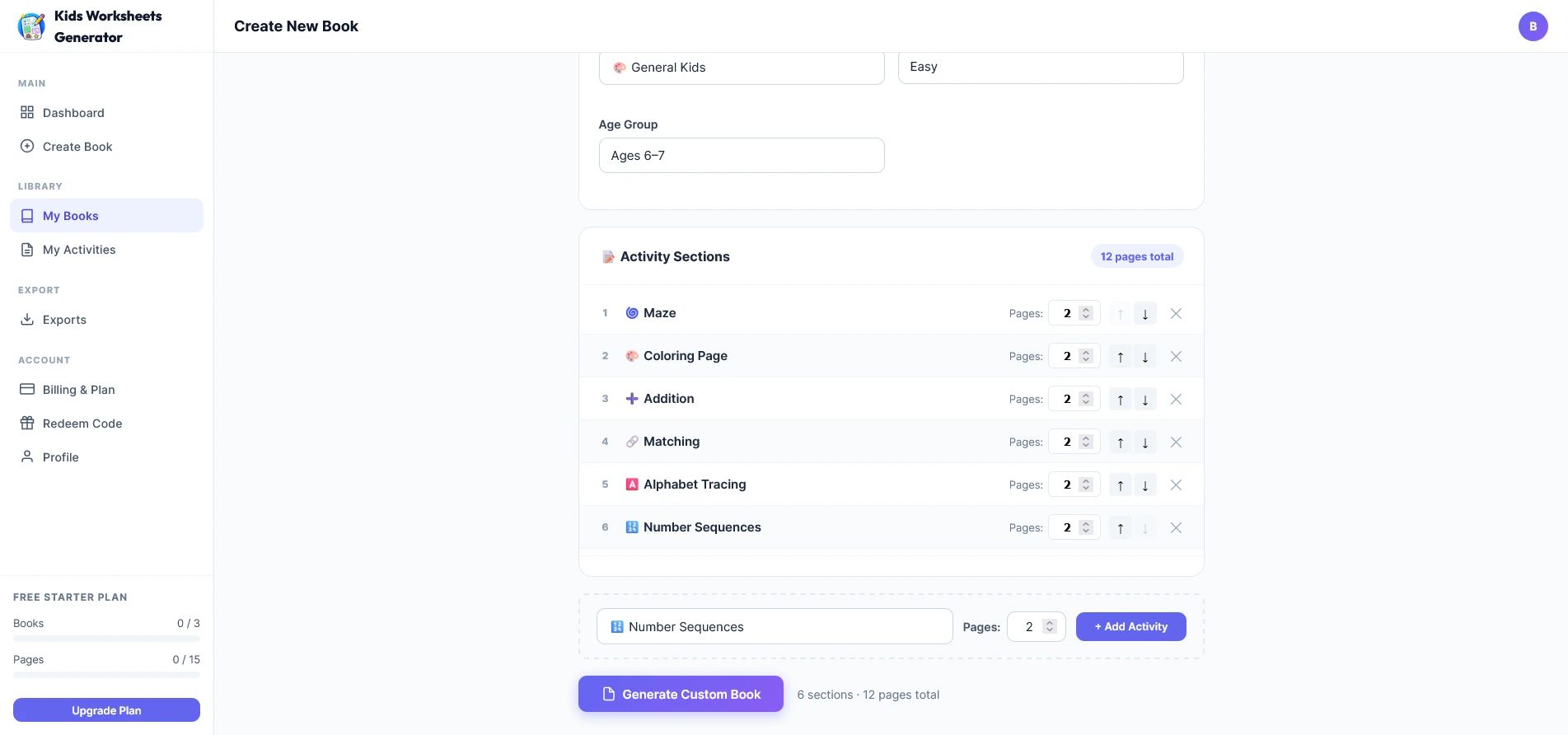
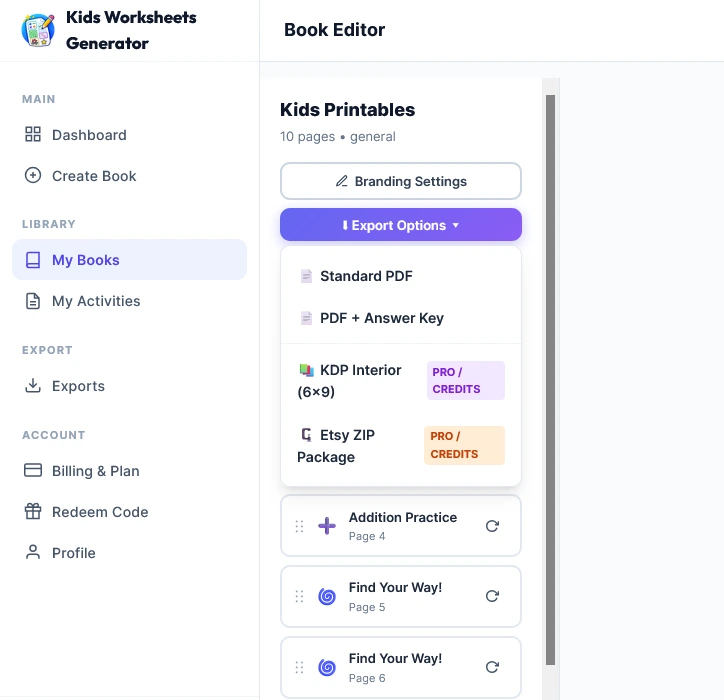
- Select Line Tracing Mode: Choose straight lines, wave tracks, zig-zags, or shape outlines with customizable stroke widths.
- Choose Thematic Markers: Pick child-friendly start and finish icons matching your weekly theme (e.g., cars to garages, bees to flowers).
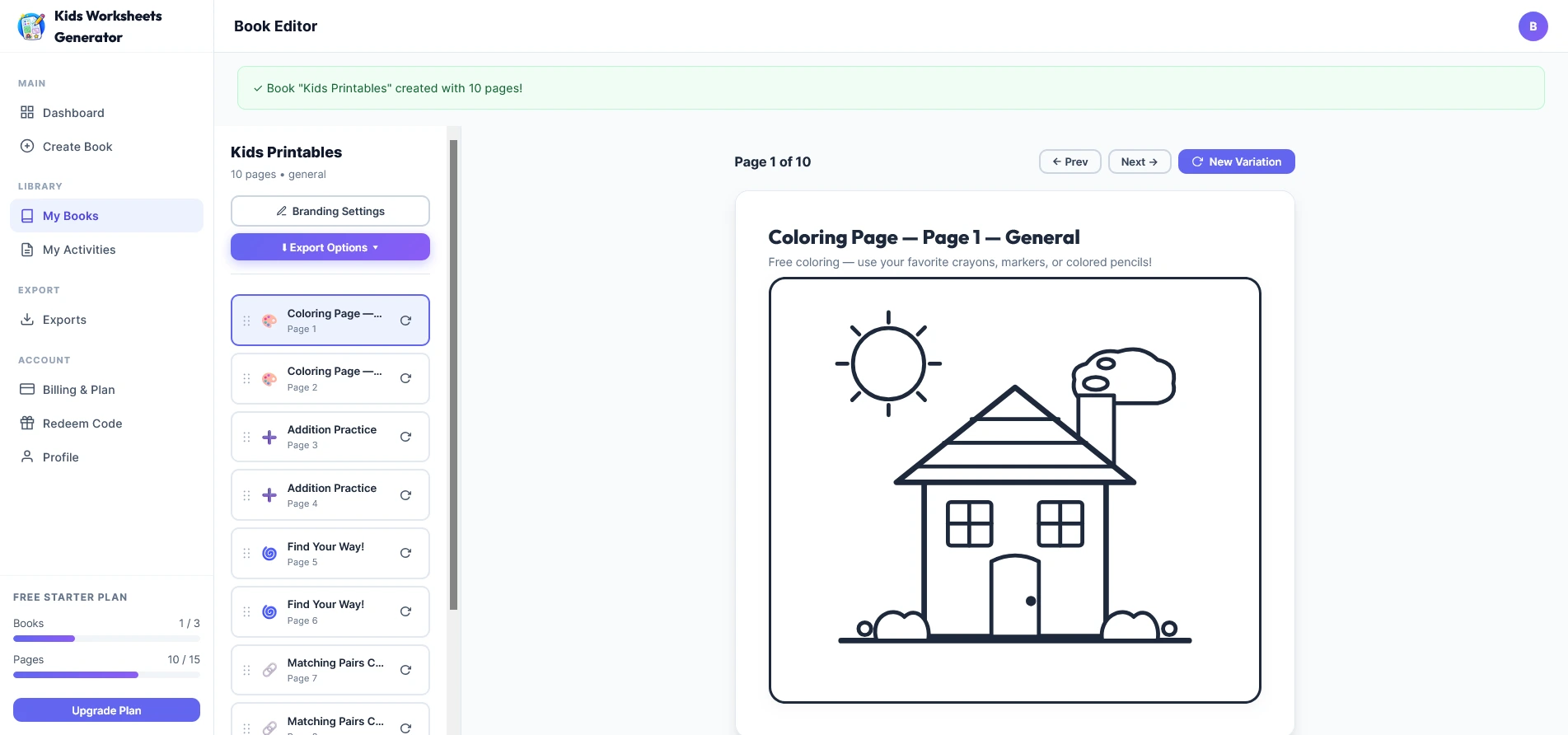
- Sequence in Book Builder: Arrange 15 to 25 tracing pages starting with horizontal lines and advancing gradually to curved paths.
- Export Clean Vector PDFs: Download high-resolution print files optimized for standard 8.5 x 11 inch Letter or A4 dimensions.
Sensory Tracing Alternatives: Finger Paint, Playdough Mats, and Dry-Erase Sleeves
To keep toddler pre-writing practice engaging, incorporate multi-sensory materials alongside standard crayons:
- Finger Paint Path Tracing: Print wide line sheets on cardstock and let toddlers dip their index finger in washable paint to trace paths directly.
- Playdough Snake Mats: Laminate shape tracing sheets and have toddlers roll playdough ropes to match the printed outlines, building finger strength.
- Reusable Dry-Erase Sleeves: Insert tracing sheets into clear heavy-duty plastic pockets for wipe-clean practice with washable markers.
Final Verdict
Who should use this tool?
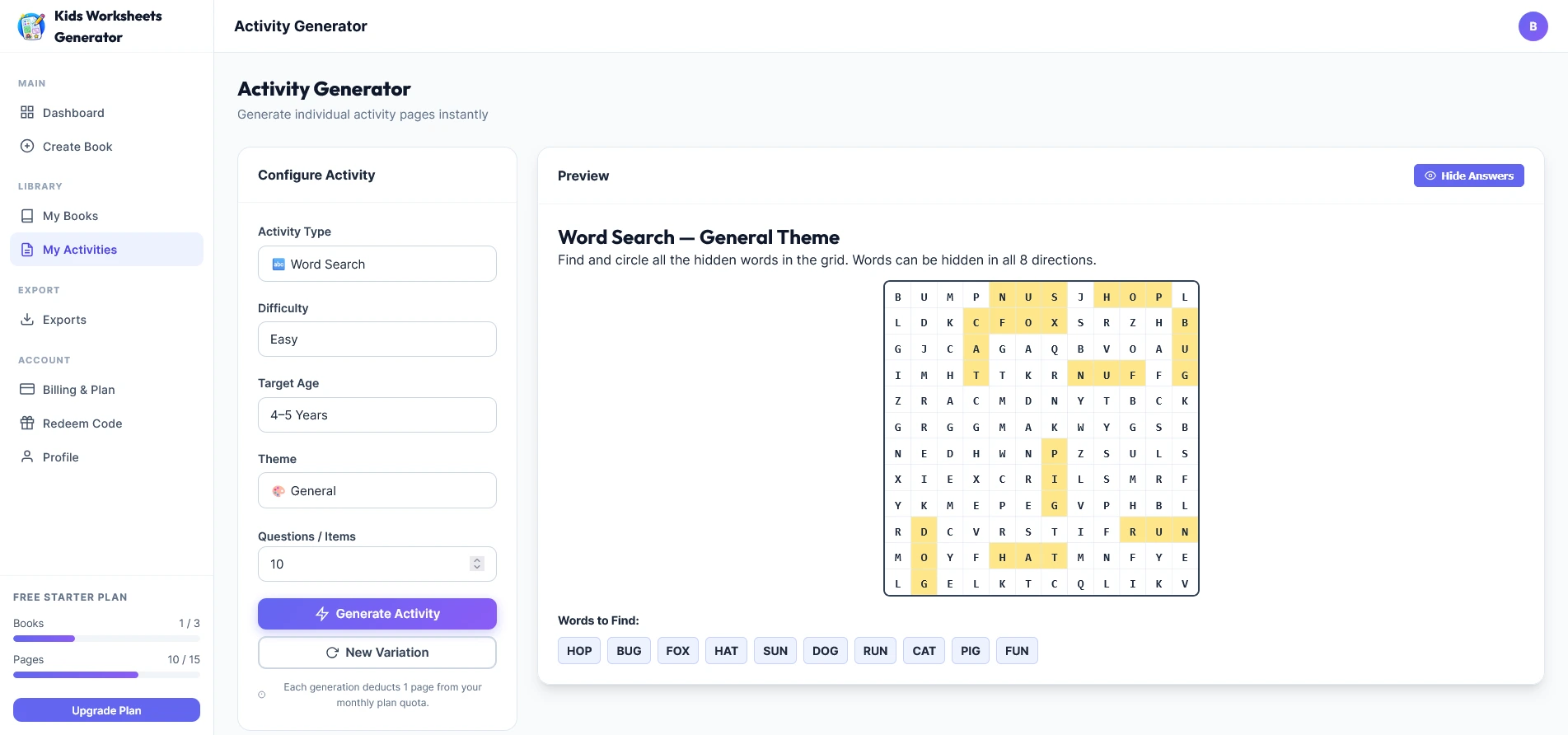
Kids Worksheets Generator is the premier software for daycare providers, nursery educators, and toddler parents looking to create customized pre-writing line tracing printables. Its wide-track stroke options, Book Builder, and instant PDF exports turn early motor skill development into an effortless, enjoyable process.
Overall Rating: 4.9 / 5
Frequently Asked Questions
What age is appropriate for nursery tracing worksheets?
Children can start gross-motor line and path tracing around age 2 to 2.5 years using wide road tracks, finger paint, or chunky triangular crayons.
Should nursery children trace alphabet letters?
No. Nursery children (ages 2 to 3) should focus on foundational pre-writing strokes like straight lines, circles, and curves before attempting formal letterforms.
What writing utensils work best for toddlers?
Chunky palm-grasp crayons, triangular beeswax crayons, and water-based dot daubers are ideal because they fit naturally into small hands without causing finger strain.
How many minutes should a toddler tracing session last?
Keep sessions short, between 5 and 10 minutes. Toddler attention spans are brief, and short daily practice produces the best fine motor gains.
Can I export full pre-writing workbooks for my daycare class?
Yes. The Book Builder in Kids Worksheets Generator compiles multiple line and path tracing sheets into unified, numbered PDF booklets ready for printing.
Generate Custom Nursery Tracing Worksheets Today
Design engaging pre-writing line sheets, toddler path booklets, and daycare printables in seconds.
Try Kids Worksheets Generator For Free →Instant access to line tracing generators, Book Builder, and print-ready PDF downloads.