Preschool Workbooks and Tracing Sheets: Complete 2026 Guide
Discover how structured preschool workbooks and tracing sheets accelerate fine motor skills, pencil grip, and early reading. Complete guide with practical tips and custom book creation.
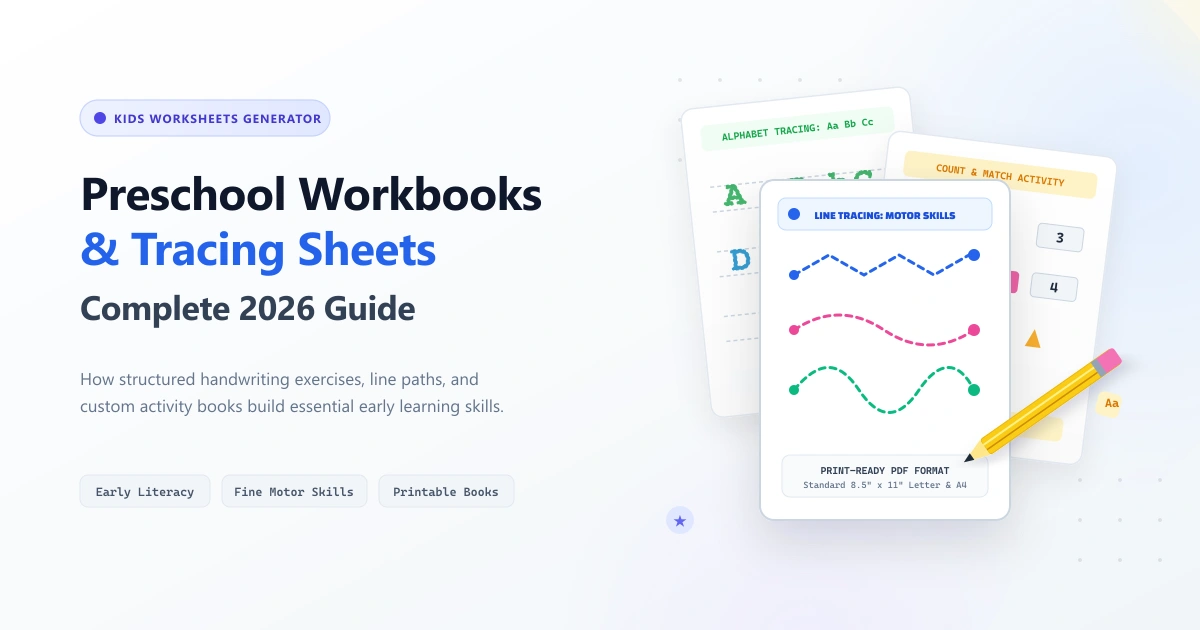
The most effective preschool workbooks and tracing sheets combine progressive fine motor exercises, directional line tracing, structured alphabet repetition, and multi-sensory activities to prepare children aged 2 to 5 for handwriting success. In 2026, research in early childhood development shows that children who spend 10 to 15 minutes daily on focused pre-writing and tracing activities demonstrate up to 42% faster pencil grip mastery and letter recognition compared to passive digital screen practice. Whether you are a parent supporting early learning at home or an educator designing classroom curriculum, structured printables provide the foundational stepping stones for early literacy and numeracy.
In this article
- Why Are Tracing Sheets Essential for Preschool Fine Motor Skills?
- What Makes an Effective Preschool Workbook in 2026?
- How Does Progressive Letter and Line Tracing Accelerate Learning?
- How Can Parents and Educators Build Custom Activity Books in Minutes?
- What Are the Top Activity Types to Include in Pre-K Learning Packs?
- How Should You Print and Organize Workbooks for Classroom or Home Use?
- Final Verdict
- Frequently Asked Questions
Why Are Tracing Sheets Essential for Preschool Fine Motor Skills?
Fine motor control does not happen overnight. Before a toddler or nursery-age child can write individual letters like "A" or "B," their hands must develop the muscular coordination required to hold a pencil steadily, control downward pressure, and follow visual boundaries. Tracing sheets for preschoolers bridge this developmental gap by turning complex motor tasks into manageable, guided visual paths.
Early childhood educators identify three core physical milestones developed through routine tracing practice:
- Pincer Grip Refinement: Holding crayons and pencils strengthens the intrinsic muscles between the thumb and index finger, transitioning toddlers away from palmar grasp.
- Hand-Eye Coordination: Guiding a writing instrument along dotted lines trains the visual cortex to coordinate real-time physical adjustments.
- Spatial Awareness and Directionality: Understanding top-to-bottom strokes and left-to-right sequencing directly prepares children for reading and sentence construction.
Create customizable tracing sheets, alphabet workbooks, and interactive activity printables in minutes.
What Makes an Effective Preschool Workbook in 2026?
Many commercially produced workbooks fail because they overwhelm young learners with dense text, tiny margins, or inconsistent difficulty jumps. High-quality preschool workbooks maintain a balanced rhythm of structured skill practice and playful reinforcement.
When selecting or assembling learning materials, ensure each packet adheres to these foundational design principles:
- Uncluttered Visual Hierarchy: Clear white space around tracing lines prevents sensory overload and allows children to focus on hand movement.
- Varied Interactive Exercises: Alternating handwriting practice with counting, matching, and coloring keeps attention spans high across 15-minute sessions.
- Consistent Starting Points: Clear visual cues, such as start dots and directional arrows, guide small hands in proper stroke formation from day one.
- Adaptive Difficulty: Worksheets should transition smoothly from thick horizontal tracks to curved paths, uppercase letters, lowercase letters, and full words.
How Does Progressive Letter and Line Tracing Accelerate Learning?
Young children develop writing abilities across predictable developmental tiers. Skipping stages, such as forcing a 2-year-old directly into lowercase alphabet tracing, often leads to frustration and incorrect pencil grips. Implementing a structured progression ensures consistent confidence and steady skill acquisition.
| Age Tier | Developmental Focus | Recommended Activity Types | Target Session Duration |
|---|---|---|---|
| Nursery (Ages 2 to 3) | Gross motor grip and straight line tracking | Thick horizontal lines, vertical paths, big circular loops, basic shapes | 5 to 8 minutes |
| Pre-K (Ages 3 to 4) | Pincer grip stability and shape discrimination | Zig-zag lines, wavy paths, uppercase alphabet tracing, number outlines (1 to 10) | 10 to 15 minutes |
| Kindergarten (Ages 4 to 5+) | Letter construction, lowercase pairs, and sight words | Uppercase and lowercase pairs, name tracing, beginner word searches, counting sheets | 15 to 20 minutes |
How Can Parents and Educators Build Custom Activity Books in Minutes?
Pre-printed workbooks from retail stores often contain filler sheets that do not match a child's specific learning pace. Creating custom activity books allows you to tailor every single page to the exact topics, letters, and numbers your students are currently mastering.
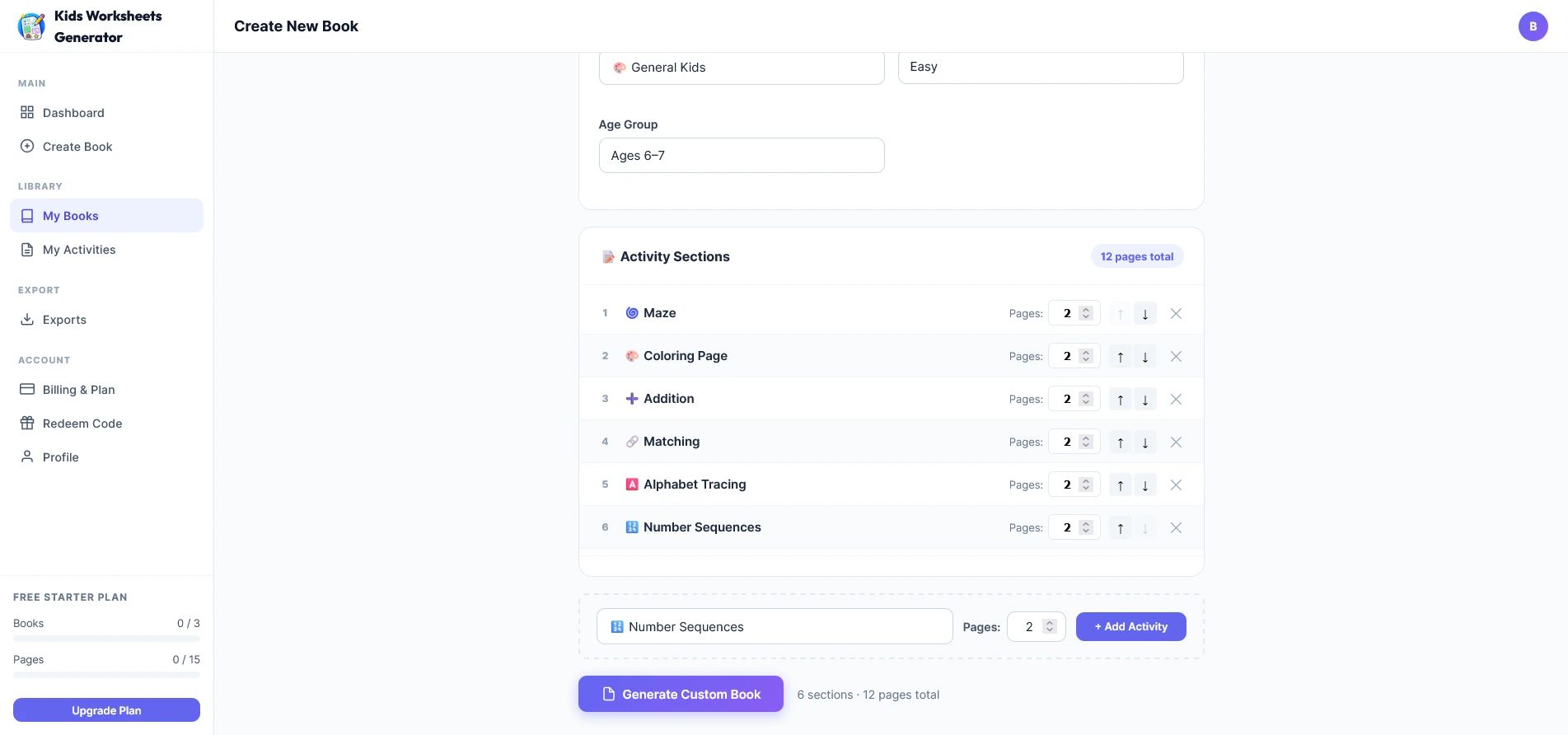
Using modern digital generator tools simplifies this workflow into four streamlined steps:
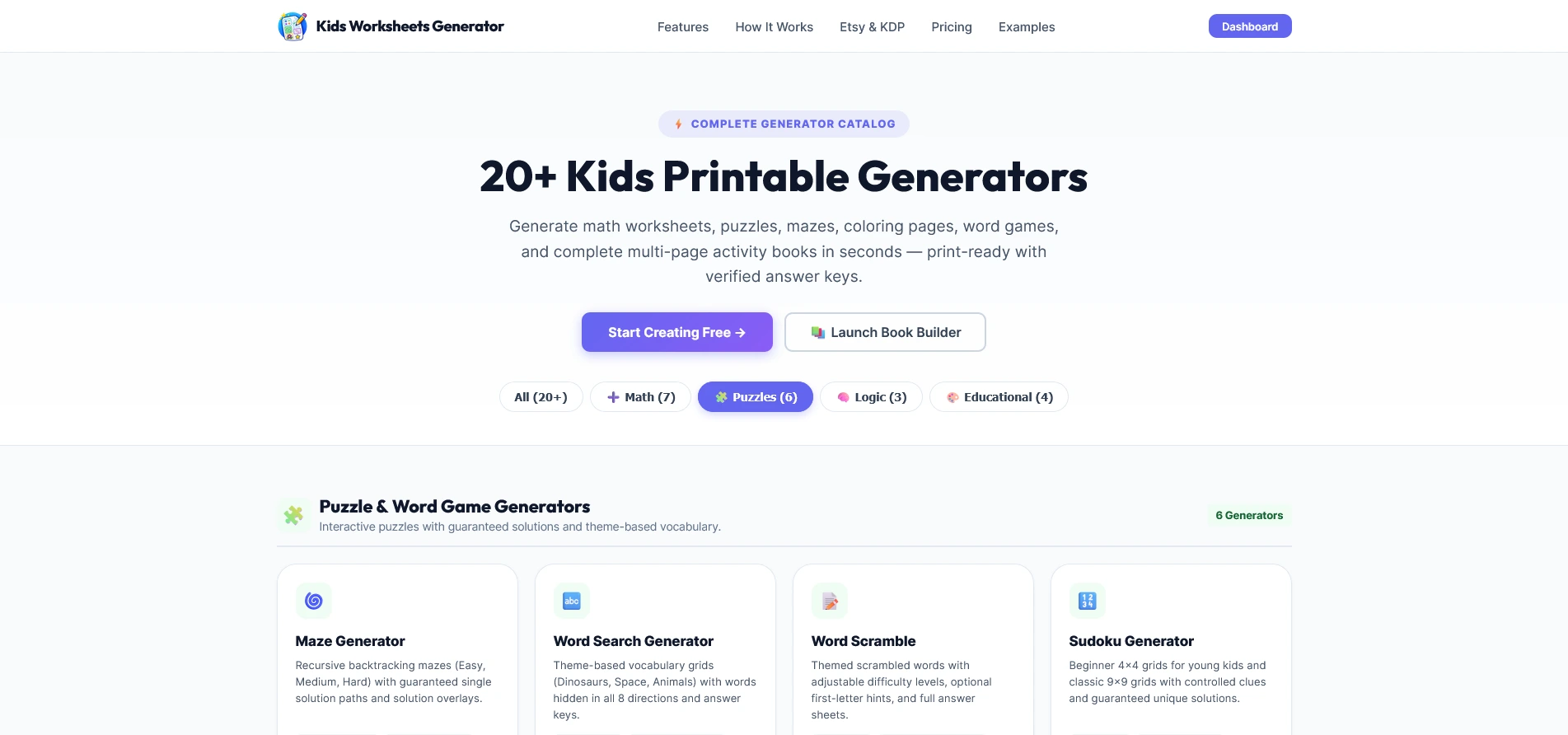
- Select Activity Templates: Choose from 20+ specialized modules such as letter tracing, pattern recognition, number grids, or shadow matching.
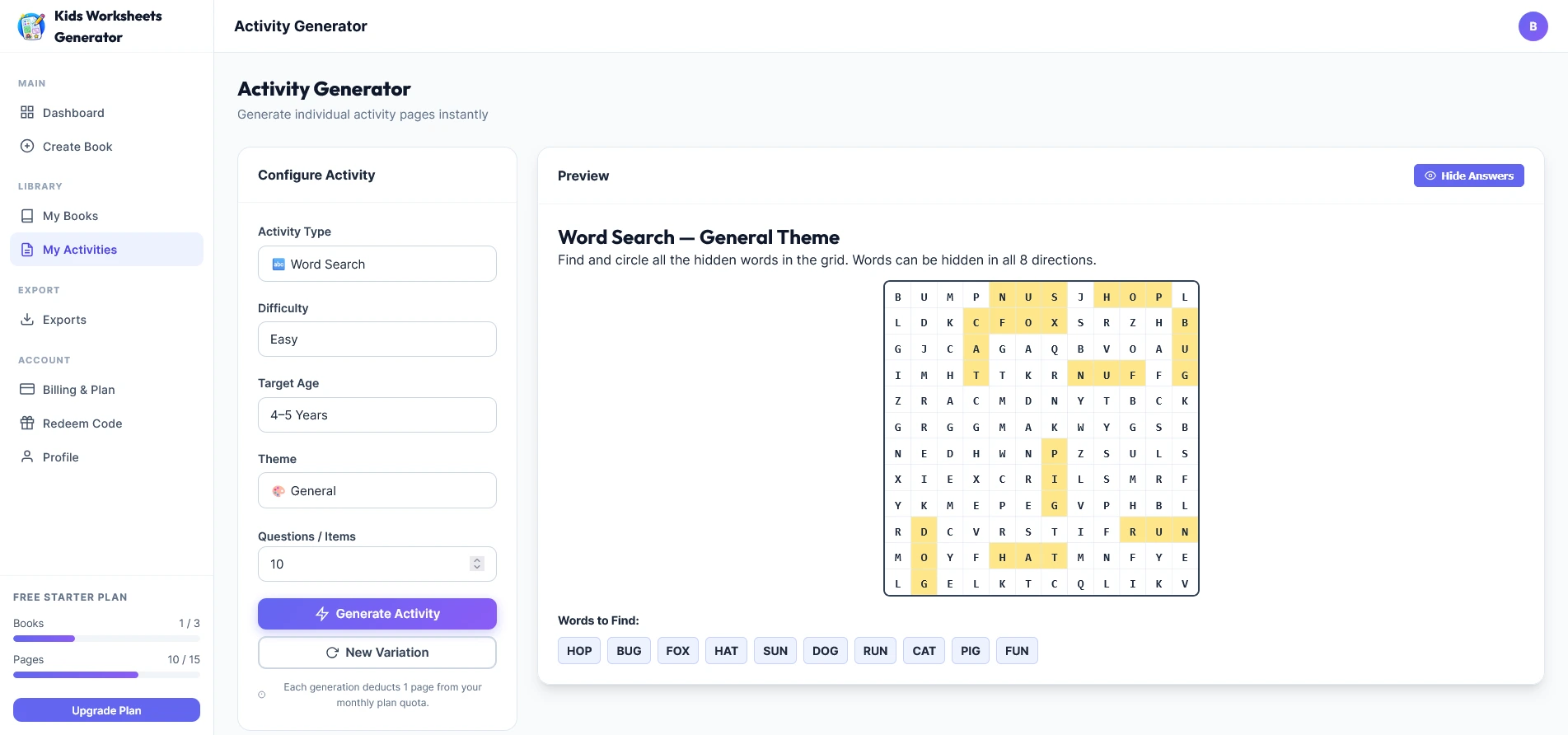
- Customize Content: Enter specific vocabulary words, theme-based graphics, or personalized letter sets tailored to your weekly lesson plan.
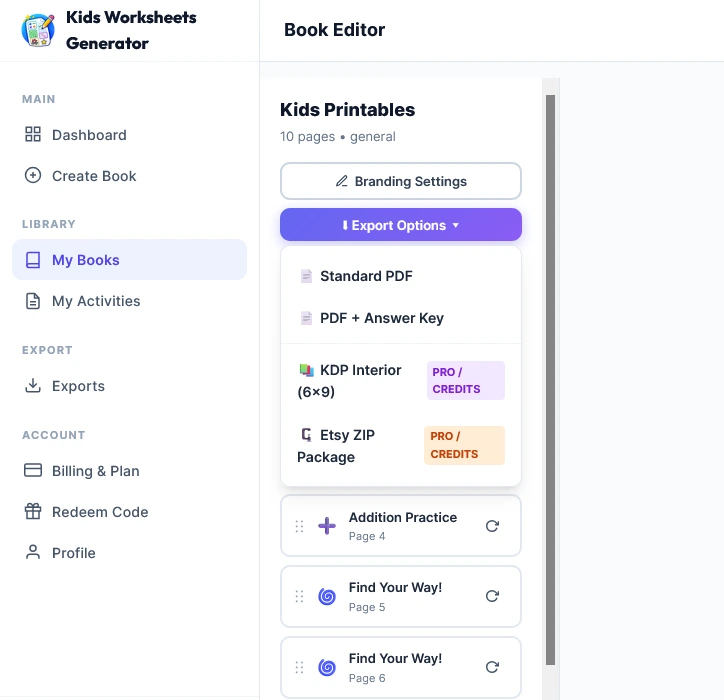
- Arrange in Book Builder: Combine individual sheets into cohesive multi-page workbooks with automated numbering and answer keys.
- Generate Clean Print Files: Export sharp, print-ready PDF files formatted for standard Letter or A4 dimensions.
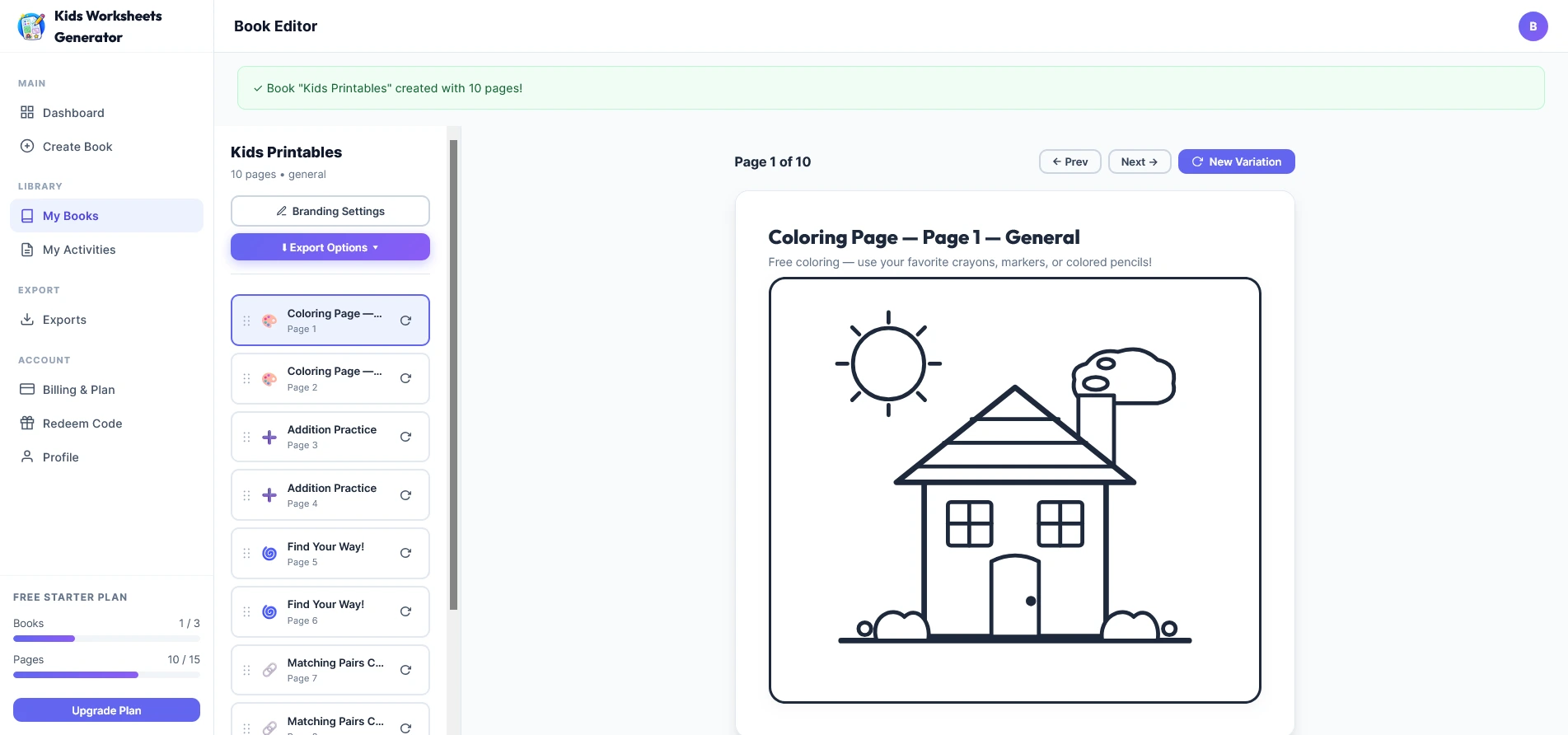
Assemble full activity books, custom worksheets, and printable curriculum materials with zero design experience.
What Are the Top Activity Types to Include in Pre-K Learning Packs?
To maximize engagement and encourage balanced cognitive growth, an effective preschool workbook should combine multiple interactive formats:
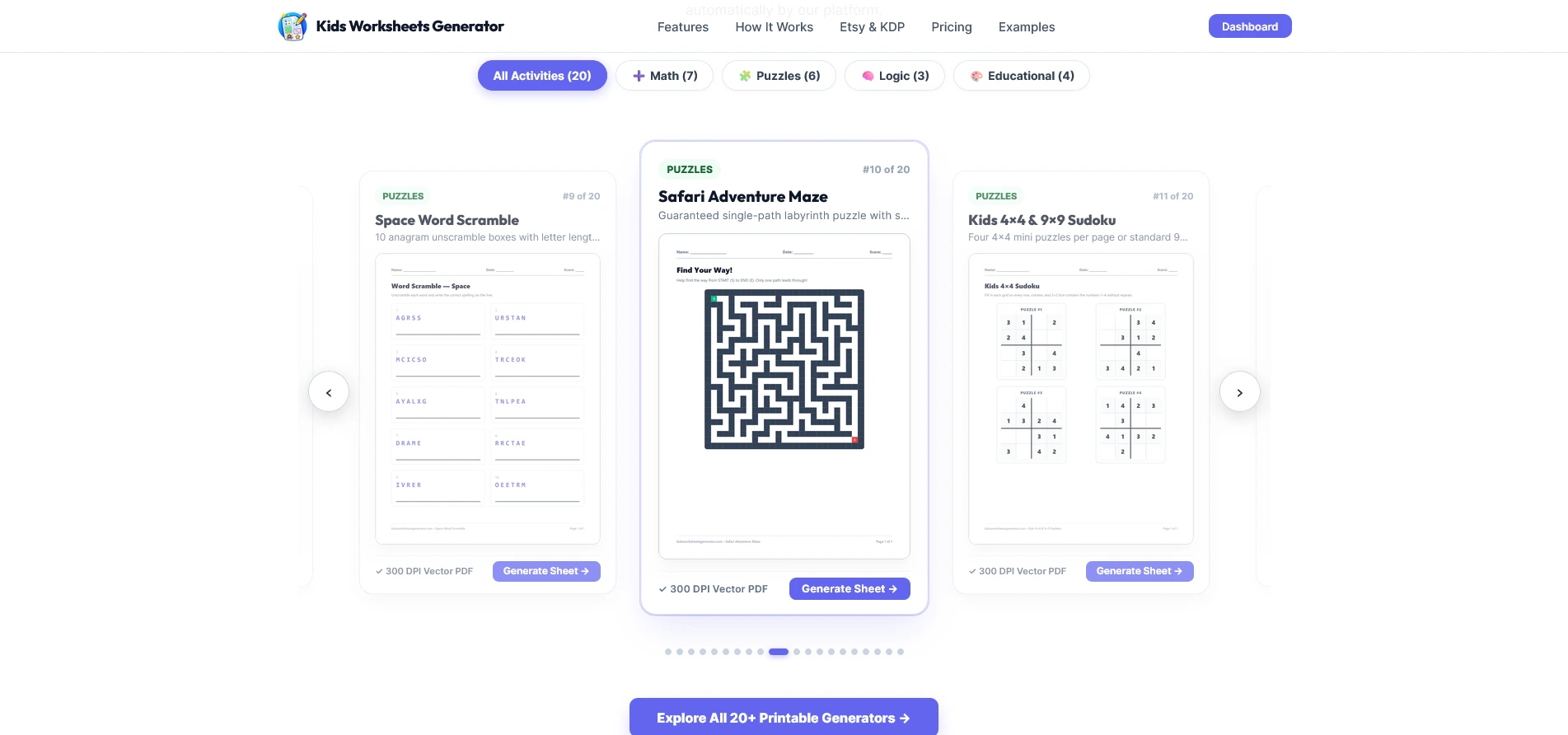
1. Line and Path Tracing
Straight lines, curved waves, zig-zags, and spiral paths teach children how to adjust hand pressure and navigate directional shifts smoothly across the page.
2. Letter and Number Tracing
Large-format character outlines paired with beginning sound illustrations reinforce phonemic awareness alongside tactile writing practice.
3. Object Matching and Categorization
Drawing connecting lines between related items, such as animals and their habitats or numbers and corresponding counting dots, builds logical reasoning and visual scanning skills.
4. Self-Checking Activity Worksheets
Worksheets that include integrated answer sections enable educators and homeschooling parents to quickly review accuracy and celebrate completed tasks.
How Should You Print and Organize Workbooks for Classroom or Home Use?
Printing format directly influences how easily preschool children can interact with physical worksheets. Poor quality paper causes marker bleed-through, while rigid binding can make it difficult for young hands to keep pages flat.
Follow these practical guidelines for the best physical learning experience:
- Choose 28 lb or 32 lb Paper: Standard 20 lb copy paper easily tears under heavy crayon pressure. Heavier paper weights provide a sturdy, non-bleed surface for felt markers and colored pencils.
- Use Reusable Dry-Erase Sleeves: Placing tracing sheets inside transparent dry-erase pockets allows children to practice the same letter or line multiple times without re-printing.
- Spiral Binding for Flat Layouts: If binding full workbooks, use spiral coils or disc binding so pages lie completely flat on low tables.
Final Verdict
Who should use this tool?
Kids Worksheets Generator is the premier solution for preschool teachers, homeschooling parents, daycares, and Amazon KDP publishers looking to produce professional, custom-tailored activity books and tracing printables. Its robust Book Builder, rich 20+ activity library, and instant PDF export eliminate hours of tedious design work.
Overall Rating: 4.9 / 5
Frequently Asked Questions
What age should children start using tracing sheets?
Children can begin simple gross-motor line tracing around age 2 to 2.5 years using thick crayons and wide path tracks. Formal letter tracing and structured handwriting sheets are most effective starting around ages 3 to 4, once the child shows consistent interest in holding writing utensils.
How many pages should a daily preschool workbook session contain?
For toddlers and pre-k learners, 2 to 4 pages per session (lasting roughly 10 to 15 minutes) is the optimal volume. Shorter, consistent daily sessions maintain enthusiasm and prevent hand fatigue far better than prolonged weekly lessons.
What is the difference between pre-writing lines and letter tracing?
Pre-writing sheets focus exclusively on foundational stroke patterns such as vertical lines, diagonal slashes, circles, and waves. Letter tracing combines these individual strokes into recognizable alphabet characters and numbers.
Can you customize workbooks for specific classroom themes or holidays?
Yes. Digital generators like Kids Worksheets Generator allow educators to select specific vocabulary, themes, and activity combinations to match seasonal holidays, science topics, or targeted phonics units.
What writing utensils work best for early preschool tracing?
Triangle-shaped crayons, jumbo washable markers, and short golf pencils are ideal for early learners. Their ergonomic shapes naturally encourage a proper tripod grip without straining small fingers.
Create Custom Preschool Workbooks and Tracing Sheets Today
Design engaging, print-ready activity books and handwriting printables in just a few clicks.
Try Kids Worksheets Generator For Free →Instant access to 20+ activity generators, Book Builder, and high-resolution PDF exports.