Preschool Letter Tracing and Handwriting Worksheets: 2026 Guide
Master preschool letter tracing and handwriting practice. Discover developmental stroke progressions, nursery sheets, and custom printables in 2026.
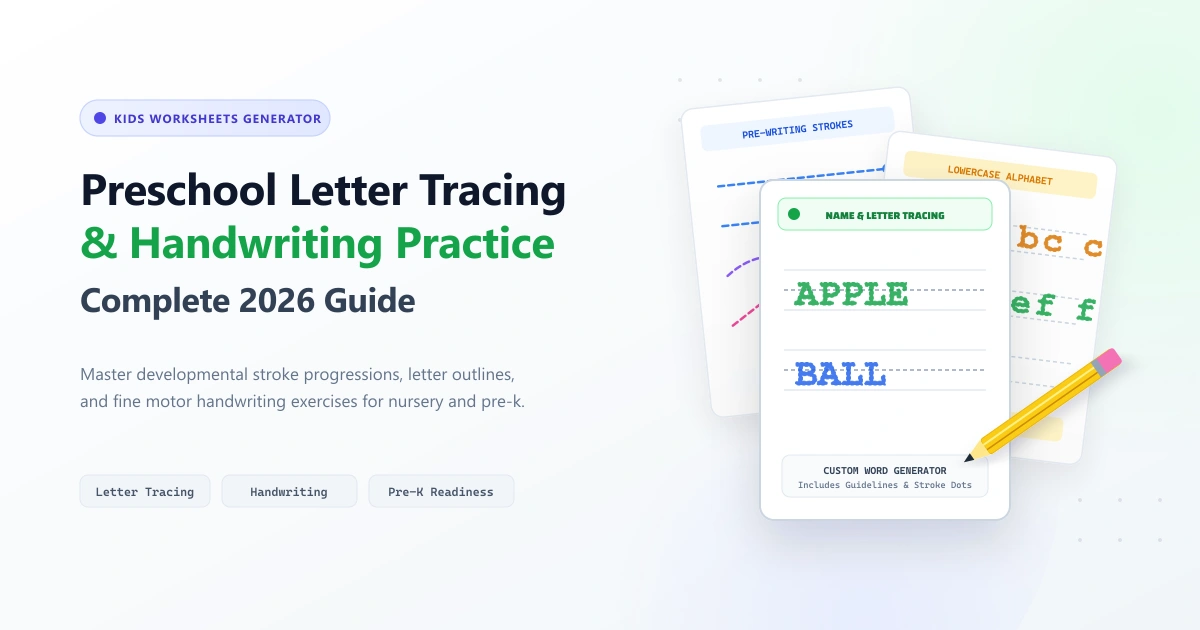
Preschool letter tracing worksheets provide the essential foundation for early pencil grip development, alphabet recognition, and fluent handwriting. In 2026, research in early childhood motor skills confirms that nursery and pre-k children who practice structured directional line and letter tracing for 10 to 15 minutes daily develop proper tripod finger grasp up to 40% faster than children using unguided freehand drawing. By following a structured developmental progression from basic pre-writing paths to uppercase outlines and lowercase letter pairs, parents and teachers can build lasting handwriting confidence without causing hand fatigue.
In this article
- What Are the Essential Developmental Stages of Early Handwriting?
- Why Should You Start with Pre-Writing Stroke Paths Before Letters?
- How to Structure Uppercase vs Lowercase Alphabet Tracing Sheets
- How Can Teachers and Parents Generate Custom Phonics and Name Tracing Pages?
- Best Practices for Printing, Laminating, and Reusing Handwriting Worksheets
- Final Verdict
- Frequently Asked Questions
What Are the Essential Developmental Stages of Early Handwriting?
Handwriting is a complex physical and cognitive process requiring shoulder stability, wrist control, and finger dexterity. Pushing a 2-year-old or young preschooler into small lowercase letters before their hands are ready often leads to awkward fist grips and writing avoidance.
| Age Tier | Grip Stage | Recommended Tracing Activity | Target Motor Skill |
|---|---|---|---|
| Nursery (Ages 2 to 3) | Palmar and Digital Pronate Grip | Thick horizontal lines, vertical drops, large circles, road tracks | Gross motor shoulder and elbow guidance |
| Pre-K (Ages 3 to 4) | Static Tripod Grip (4-finger grasp) | Zig-zag lines, wave curves, uppercase alphabet outlines, number lines 1 to 10 | Wrist control and visual boundary tracking |
| Kindergarten (Ages 4 to 5+) | Dynamic Tripod Grip (3-finger grasp) | Uppercase and lowercase pairs, personalized name tracing, short sight words | Fine finger movement and consistent letter sizing |
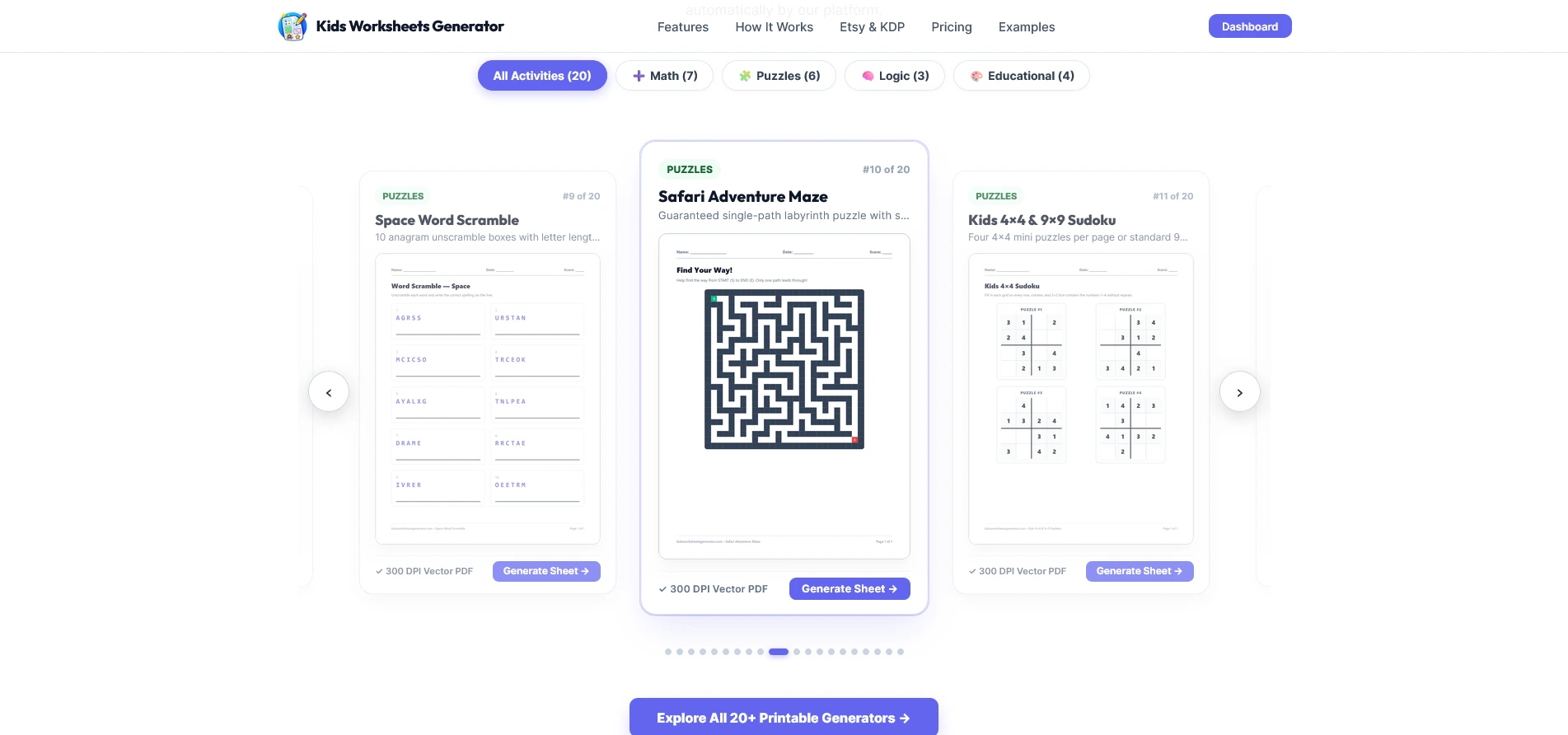
Generate customized preschool tracing sheets, letter handwriting guides, and name practice printables in seconds.
Why Should You Start with Pre-Writing Stroke Paths Before Letters?
Every letter in the alphabet is built from nine universal pre-writing strokes: vertical lines, horizontal lines, circles, cross pluses, diagonal slashes, squares, X shapes, and triangles. Mastering these individual line components gives children the muscle memory needed to form letters without hesitation.
Top pre-writing exercises include:
- Connecting Start and Stop Dots: Guiding a crayon from a green start dot to a red stop circle teaches children how to plan pencil movement.
- Curved and Wavy Rivers: Smooth wave patterns train the wrist to rotate fluidly, which is necessary for curved letters like C, O, S, and G.
- Zig-Zag Mountain Paths: Abrupt direction shifts build hand stability required for sharp letters like M, N, V, W, and Z.
How to Structure Uppercase vs Lowercase Alphabet Tracing Sheets
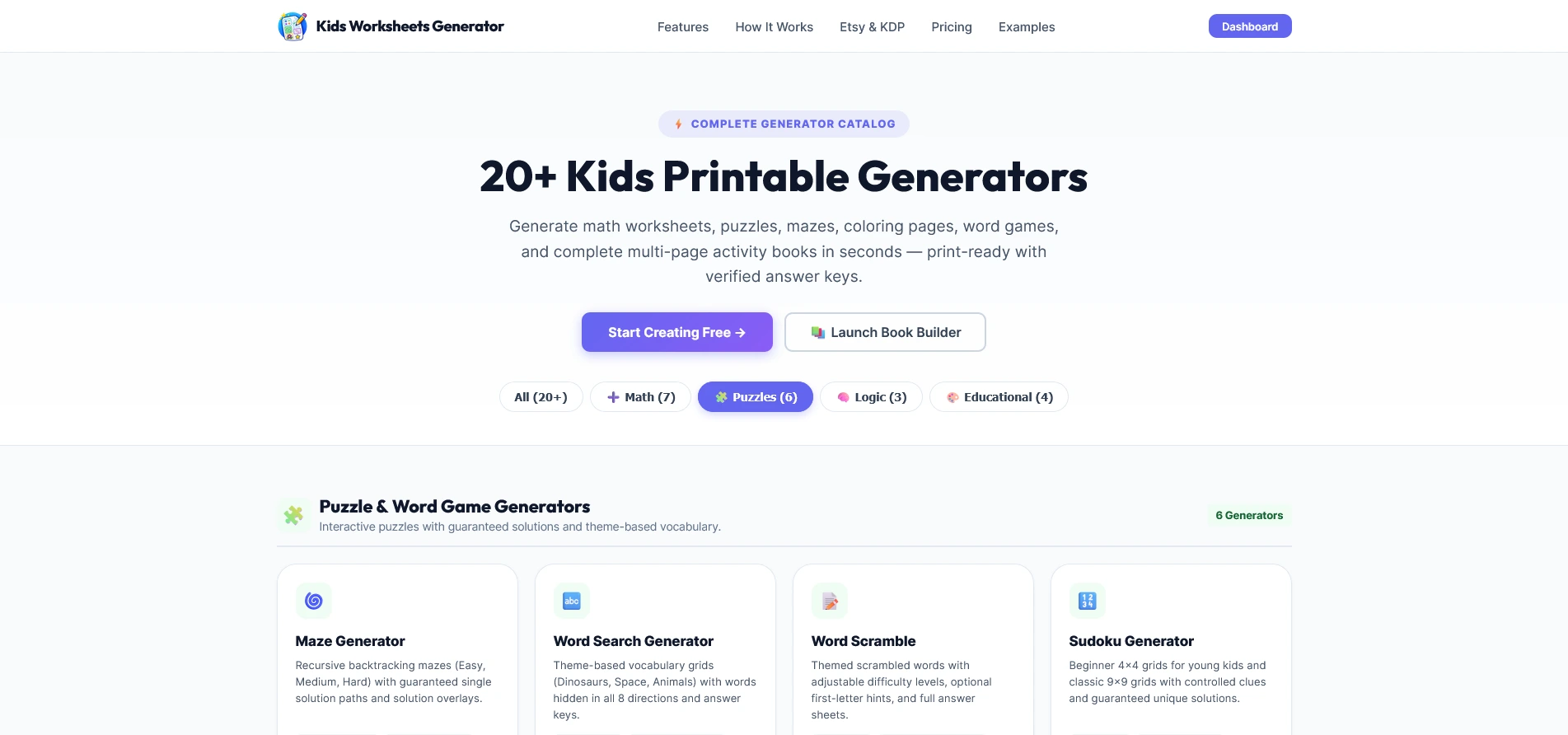
Educators recommend introducing uppercase letters first because capital letters are composed mostly of straight lines and consistent heights, making them easier for young eyes and hands to reproduce.
When organizing your alphabet tracing sequence:
- Straight Line Capitals First: Begin with letters like L, T, I, H, F, and E before introducing letters with diagonal slashes (A, K, M, N) or curves (B, D, P, R).
- Paired Lowercase Recognition: Once capitals are recognizable, introduce matching lowercase pairs (Aa, Bb, Cc) so children associate phonetic sounds with both cases.
- Handwriting Baseline Guidelines: Ensure sheets feature clear top, middle dashed, and bottom baseline lines to teach proper letter proportions and descenders (g, j, p, q, y).
Create personalized name tracing worksheets and alphabet practice packets with clear dotted font guidelines.
How Can Teachers and Parents Generate Custom Phonics and Name Tracing Pages?
Children are naturally more excited to practice handwriting when their own name or favorite animals appear on the worksheet. Custom worksheet generator software allows you to produce personalized practice pages in seconds.
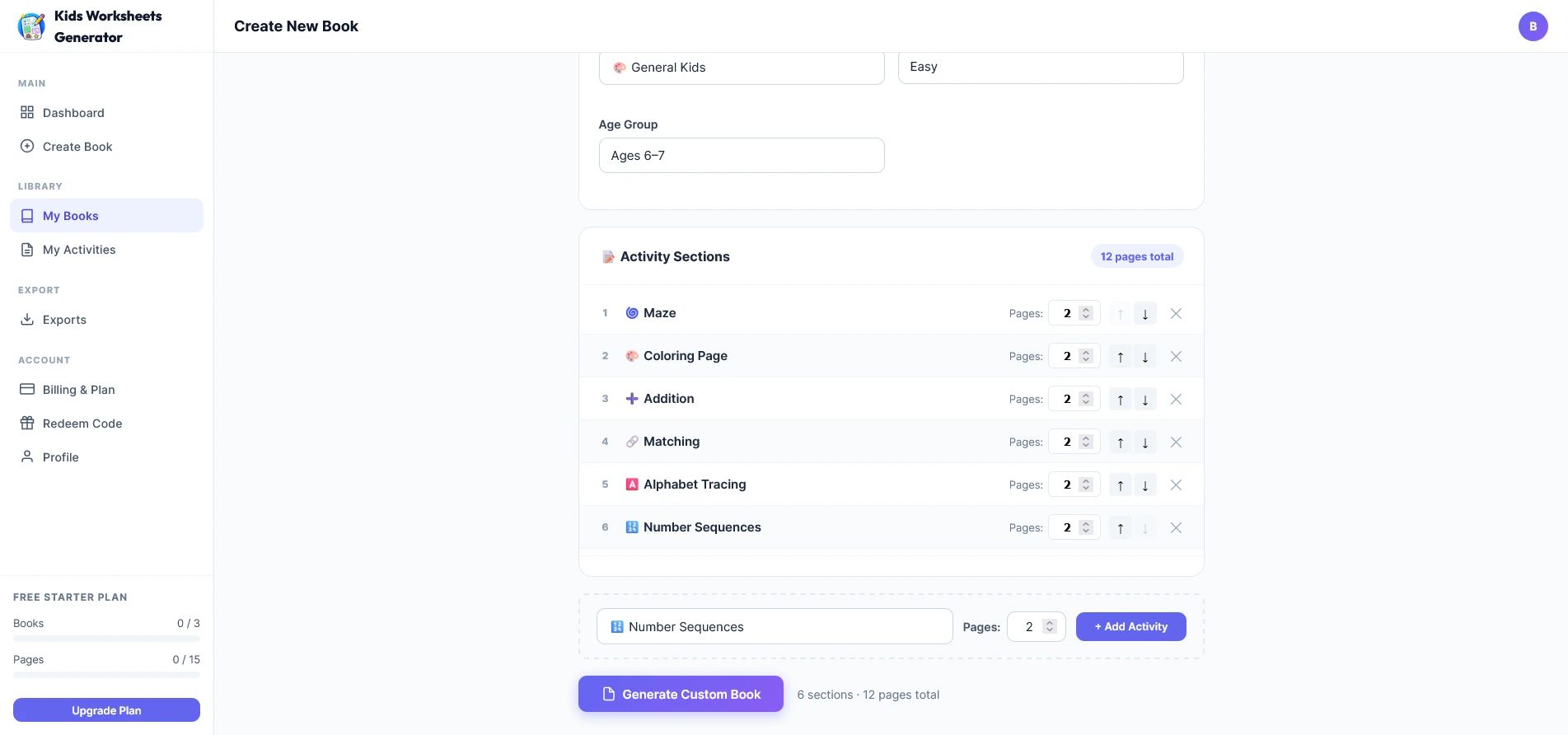
Key customization capabilities include:
- Personalized Name Tracing: Type in any student first name or full name to generate custom dotted tracing lines for morning kindergarten warm-ups.
- Sight Word Lists: Create targeted practice sheets for Dolch and Fry sight words matching your weekly phonics curriculum.
- Number and Word Combinations: Reinforce early math alongside spelling by pairing digit tracing with number word tracing (1 - One, 2 - Two, 3 - Three).
Best Practices for Printing, Laminating, and Reusing Handwriting Worksheets
To reduce paper waste and maximize handwriting practice repetitions, implement these practical classroom techniques:
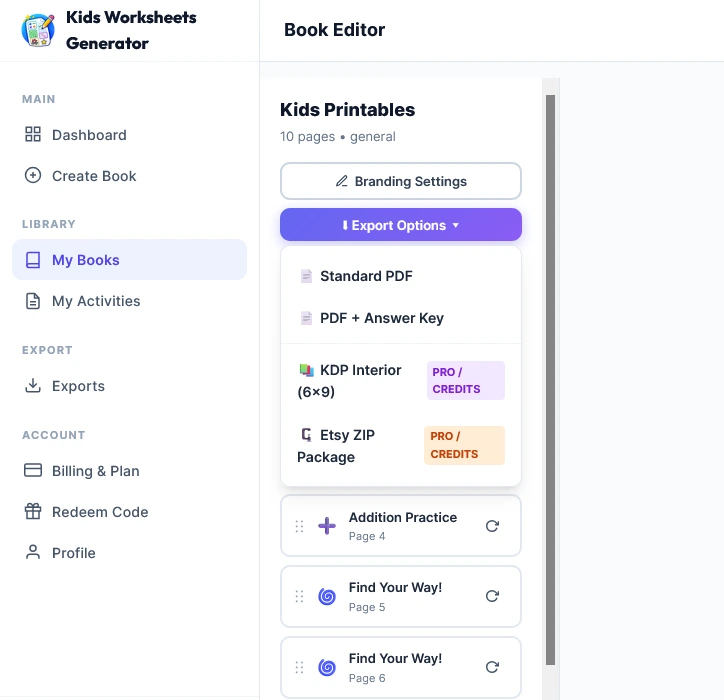
- Dry-Erase Sheet Protectors: Slip printed tracing pages into clear dry-erase plastic sleeves so children can trace, erase, and repeat with whiteboard markers.
- Thermal Lamination for Reusable Workbooks: Laminate full alphabet sets with 5 mil laminating pouches to create durable, wipe-clean handwriting centers that last all school year.
- Short Ergonomic Utensils: Pair worksheets with broken crayons, triangle pencils, or dry-erase markers to naturally prevent fist grips without painful pencil grips.
Final Verdict
Who should use this tool?
Kids Worksheets Generator is the ideal tool for preschool teachers, daycare providers, and homeschooling families looking to generate high-quality, customized handwriting practice sheets. Its versatile letter generators, customizable line guides, and print-ready PDF exports make handwriting instruction effortless and engaging.
Overall Rating: 4.9 / 5
Frequently Asked Questions
At what age should a child start tracing letters?
Most children are ready for formal letter tracing around ages 3.5 to 4 years, after they have mastered basic pre-writing strokes like straight lines, circles, and curves.
Should children learn uppercase or lowercase letter tracing first?
Uppercase letters should be taught first because they consist primarily of straight lines and uniform heights. Once capital letter recognition is solid, introduce lowercase pairs.
How can I correct a child who holds their pencil with a full fist?
Using shorter pencils (like 2-inch golf pencils) or broken crayons naturally prevents children from using their entire fist and forces their fingers into a proper tripod grasp.
How many minutes should a daily tracing session last?
Keep daily handwriting sessions between 8 and 15 minutes. Short, enjoyable daily practice produces significantly better fine motor retention than long, tiring sessions.
Can I generate personalized name tracing worksheets for my whole classroom?
Yes. Tools like Kids Worksheets Generator let you quickly type in individual student names to create unique, personalized handwriting sheets for each child in your class.
Create Custom Preschool Tracing Worksheets Today
Generate customized letter tracing, pre-writing stroke pages, and name practice printables in seconds.
Try Kids Worksheets Generator For Free →Instant access to alphabet generators, line tracing modules, and print-ready PDF downloads.