Letter Tracing for Preschoolers: Free Printable Alphabet Worksheets (2026 Guide)
Master preschool letter tracing with structured uppercase and lowercase A to Z worksheets, directional stroke guides, and automated handwriting generators.
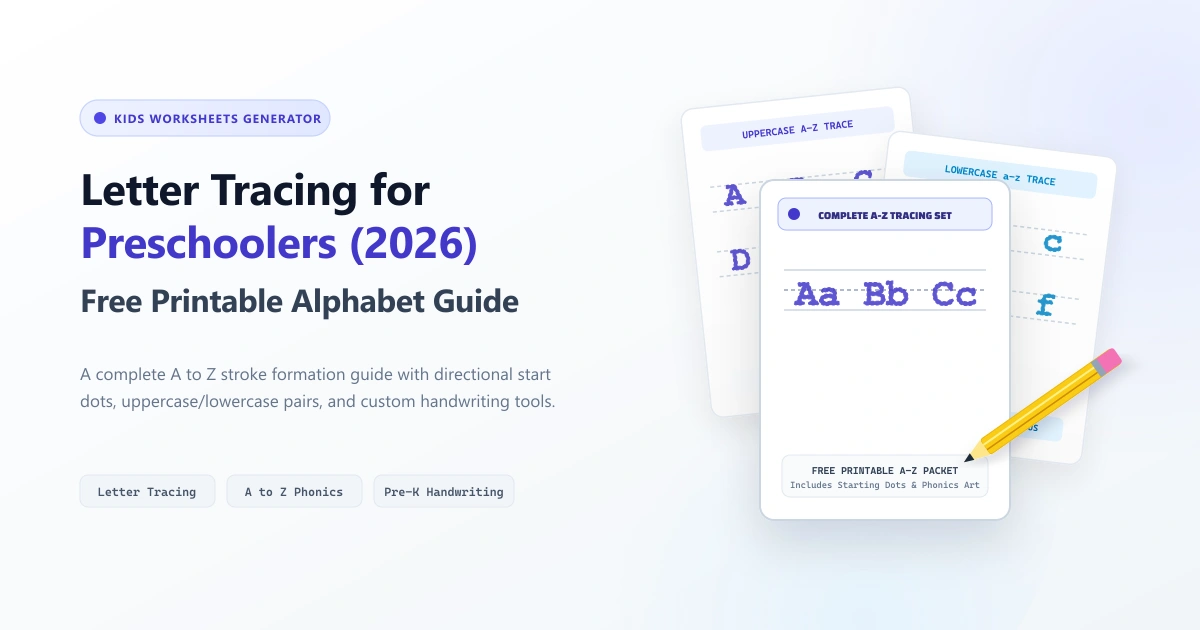
Letter tracing for preschoolers provides the indispensable biomechanical and cognitive bridge between basic sensory mark-making and fluent primary handwriting by establishing correct directional stroke habits, spatial baseline alignment, and letter-sound memory for children aged 3 to 5. In 2026, developmental occupational therapy studies show that preschoolers who practice structured letter tracing with starting dots and numbered stroke arrows for 10 minutes daily develop stable tripod pencil grasps and legible handwriting up to 47% faster than children practicing unguided copy-work. Whether you are setting up daily pre-k literacy centers or supporting your child's early alphabet journey at home, customizable printable letter tracing sheets deliver the precise visual scaffolding required for lasting writing confidence.
In this article
- How Does Structured Letter Tracing Develop Permanent Handwriting Muscle Memory?
- Complete A to Z Letter Construction and Stroke Sequence Guide
- Uppercase vs Lowercase Tracing: When and How to Transition Preschoolers
- How to Generate Personalized Name and Alphabet Tracing Packets in Minutes
- Setting Up a Reusable Daily Letter Tracing Center in Classroom or Home
- Final Verdict
- Frequently Asked Questions
How Does Structured Letter Tracing Develop Permanent Handwriting Muscle Memory?
Forming letters correctly is a sophisticated neurological process. Without structured directional guidance, young children frequently form letters from the bottom up or create awkward counter-rotational strokes that lead to hand fatigue and illegible handwriting later in elementary school.
Structured letter tracing worksheets prevent bad writing habits through four core developmental mechanisms:
- Top-Down Habituation: Distinct green starting dots teach small fingers to always initiate letter strokes at the top guideline, establishing proper kinetic momentum.
- Spatial Baseline Calibration: Primary guidelines (top line, dashed midline, and baseline) teach children how ascenders (like b, d, h) and descenders (like g, p, y) align within horizontal space.
- Pincer Grip Pressure Regulation: Following dashed guideline channels trains the fingers to apply steady, controlled pencil pressure without tearing paper.
- Grapheme-to-Phoneme Encoding: Tracing the graphic symbol of a letter while verbalizing its primary sound cements the neurological link between symbol and speech.

Create customizable 26-letter tracing worksheets, custom name tracing pages, and phonics activity packs in seconds.
Complete A to Z Letter Construction and Stroke Sequence Guide
Occupational therapists group the 26 alphabet letters into four distinct stroke families based on physical movement patterns:
| Letter Family | Target Letters | Core Kinetic Motion | Common Errors & Solutions |
|---|---|---|---|
| Straight Line Letters | L, T, I, H, F, E, l, t, i | Top-down pull strokes and horizontal crossbars | Bottom-up pushing: Place green start dots at top guidelines |
| Magic C Curved Letters | C, O, Q, G, S, c, o, a, d, g, q | Counter-clockwise circular curve starting at 2 o'clock | Clockwise reversal: Cue "curve left like Magic C" before closing loop |
| Stem & Loop Combinations | D, P, B, R, J, b, p, r, n, m, h | Downward vertical drop followed by re-tracing up into a curve | b/d reversal: Emphasize "bat down, then bounce into ball" for letter b |
| Diagonal Slash Letters | A, V, W, X, Y, Z, K, M, N, k, v, w, x, y, z | Diagonal angle descent and sharp vertex direction changes | Wobbly angles: Use dotted crosshair target points at base intersection |
Uppercase vs Lowercase Tracing: When and How to Transition Preschoolers
A frequent dilemma for preschool teachers is deciding when to introduce lowercase letters:
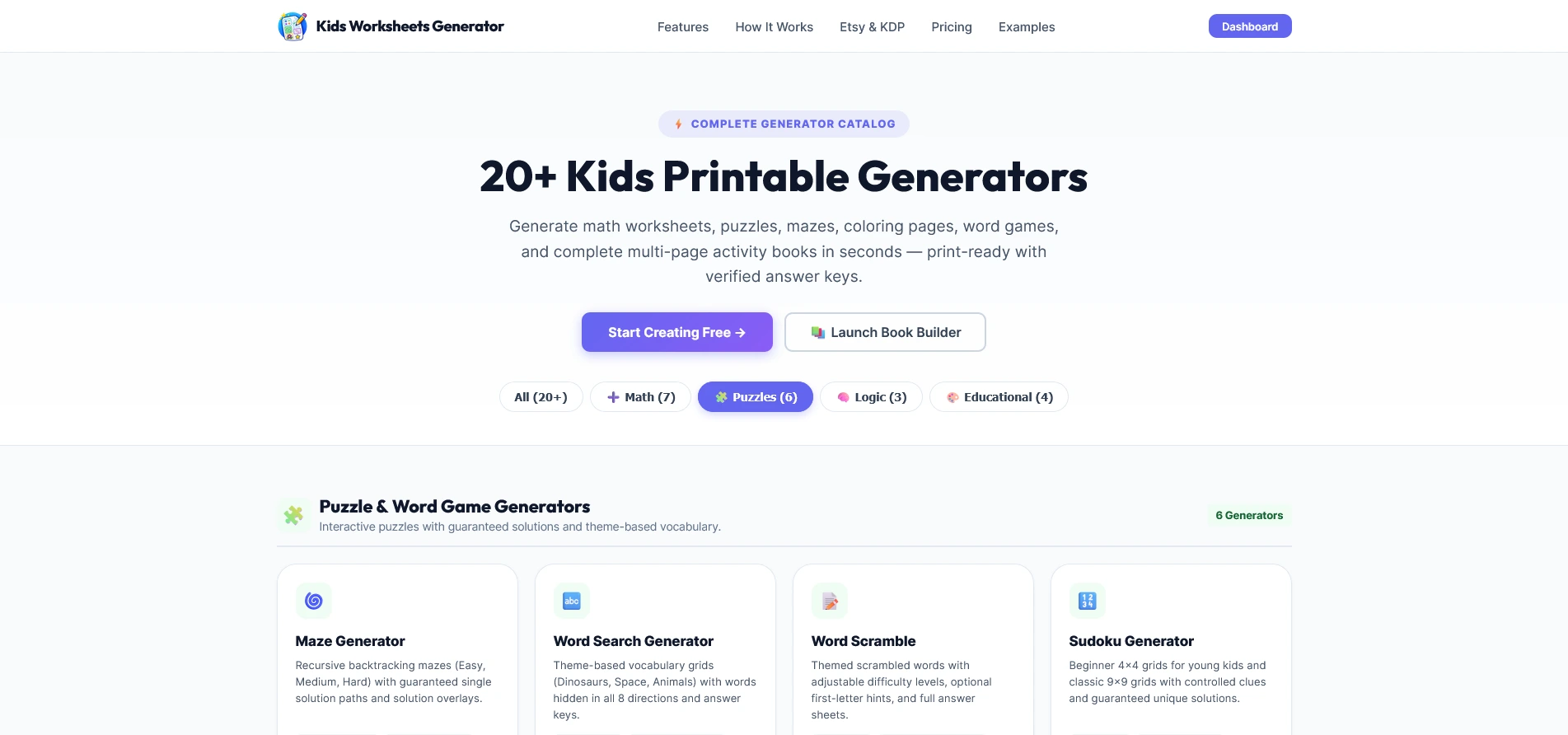
- Ages 3 to 4 (Uppercase Mastery): Capital letters are developmentally easier because all 26 letters start at the top line, are uniform in height, and contain no descending strokes.
- Ages 4 to 5 (Paired Aa, Bb Tracing): Once capital letters are recognized, introduce paired worksheets showing uppercase and lowercase side-by-side to reinforce grapheme association.
- Ages 5+ (Lowercase Dominance): Because 95% of printed reading text consists of lowercase letters, late preschoolers must transition to writing lowercase words and their own names in proper sentence case.
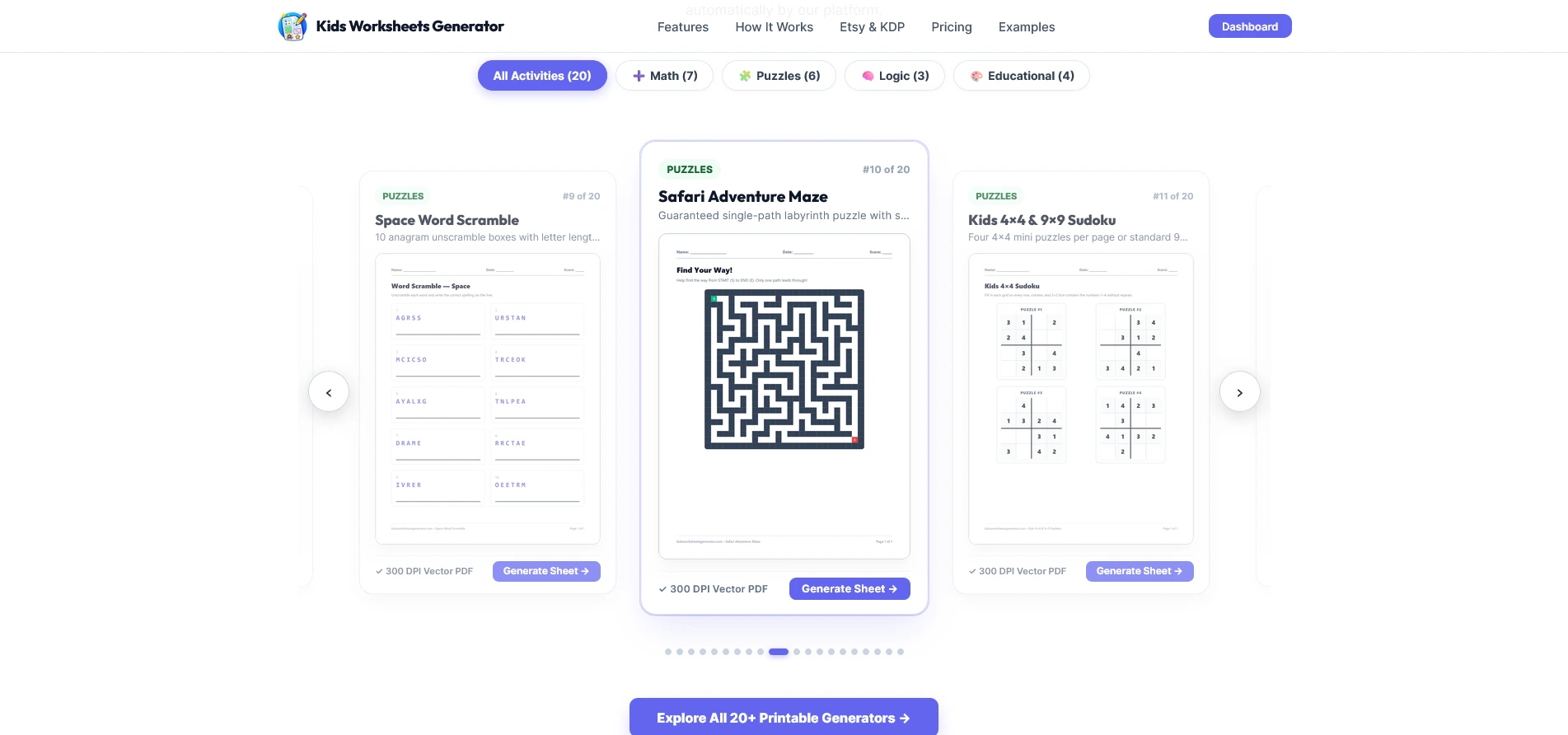
Assemble complete 26-letter handwriting workbooks, custom sight word sheets, and phonics packets in minutes.
How to Generate Personalized Name and Alphabet Tracing Packets in Minutes
Modern worksheet generator software eliminates manual font formatting and guideline alignment:
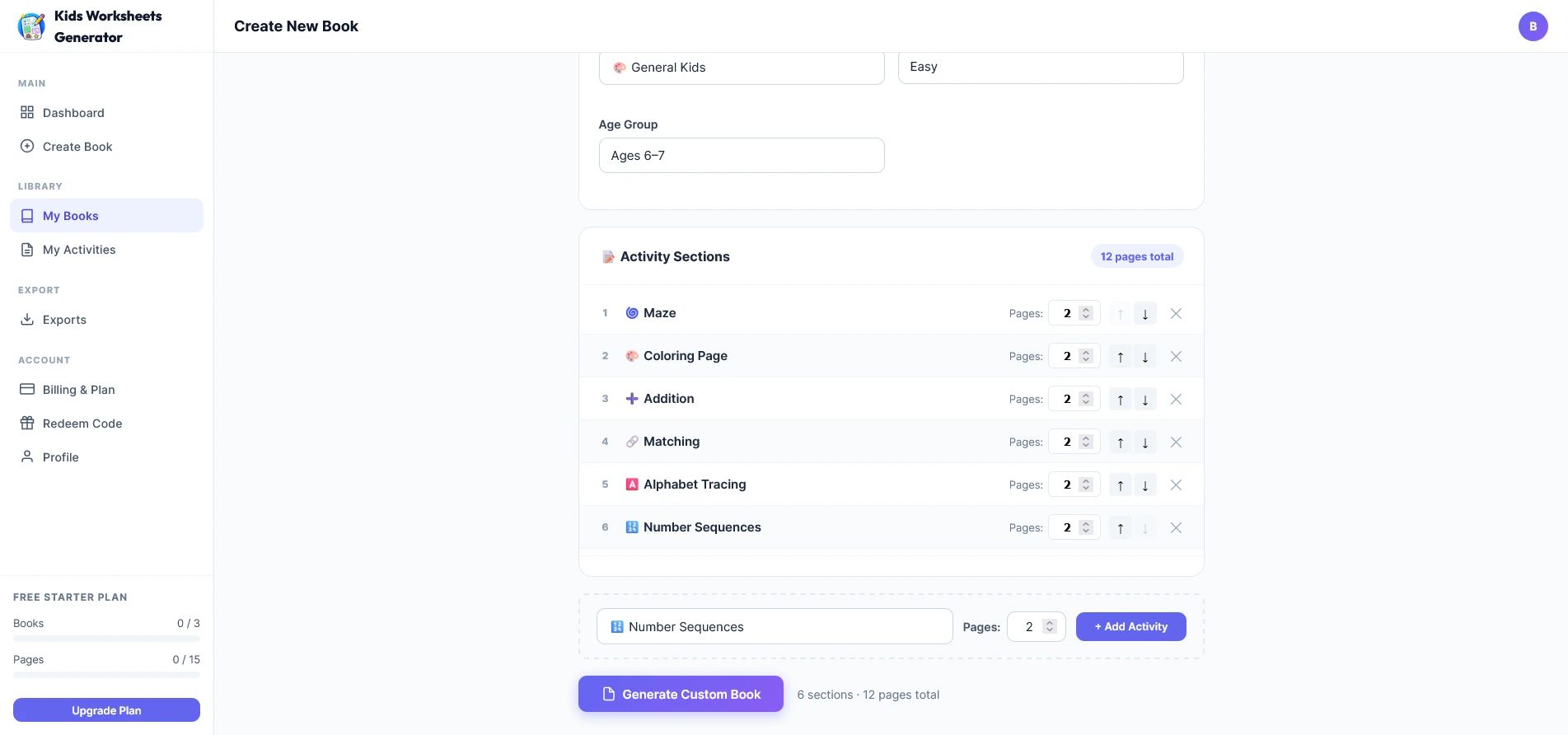
- Select Letter Case Mode: Choose uppercase only, lowercase only, or paired uppercase/lowercase tracing formats.
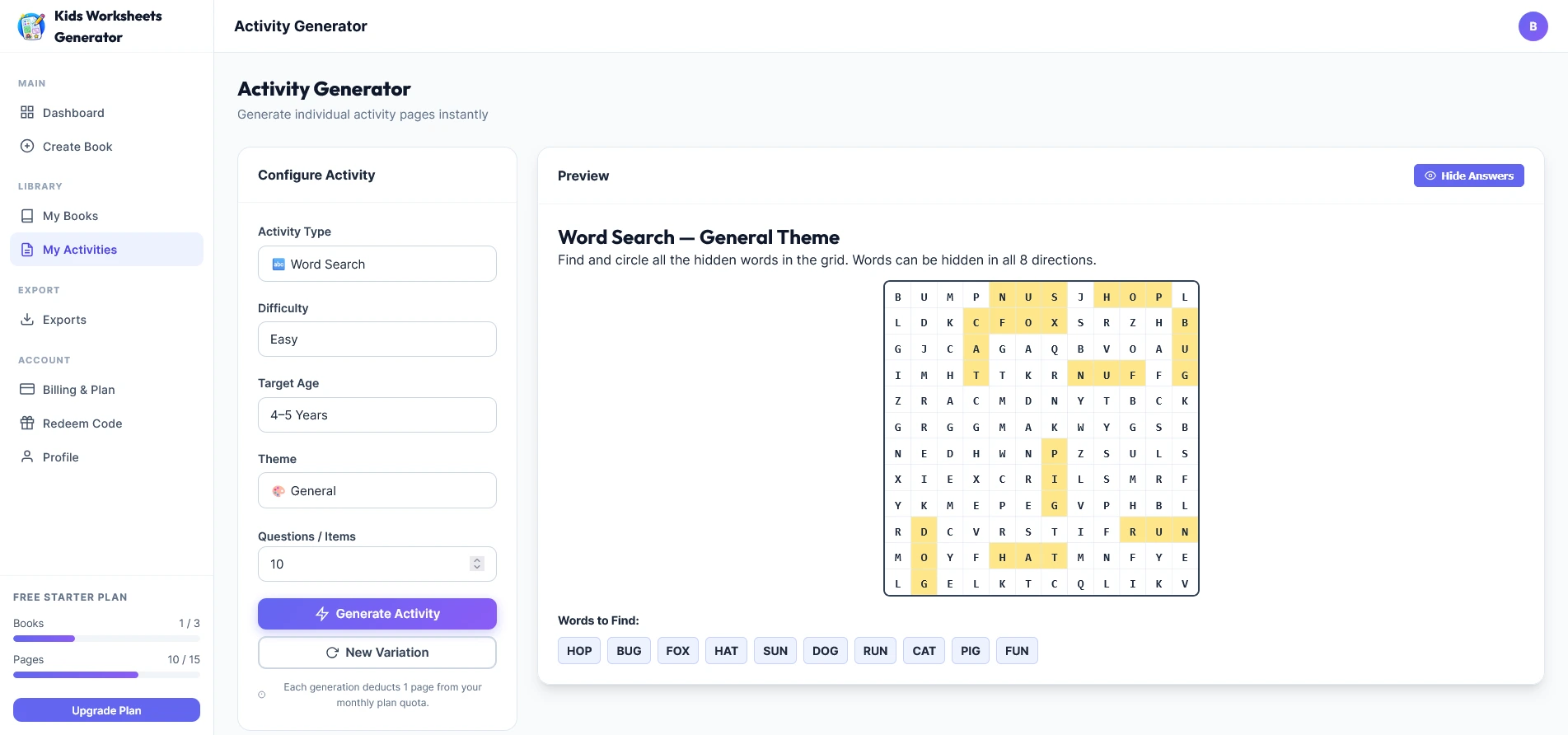
- Add Phonics Artwork & Mazes: Intersperse handwriting practice with beginning sound coloring and letter search grids to maintain high engagement.
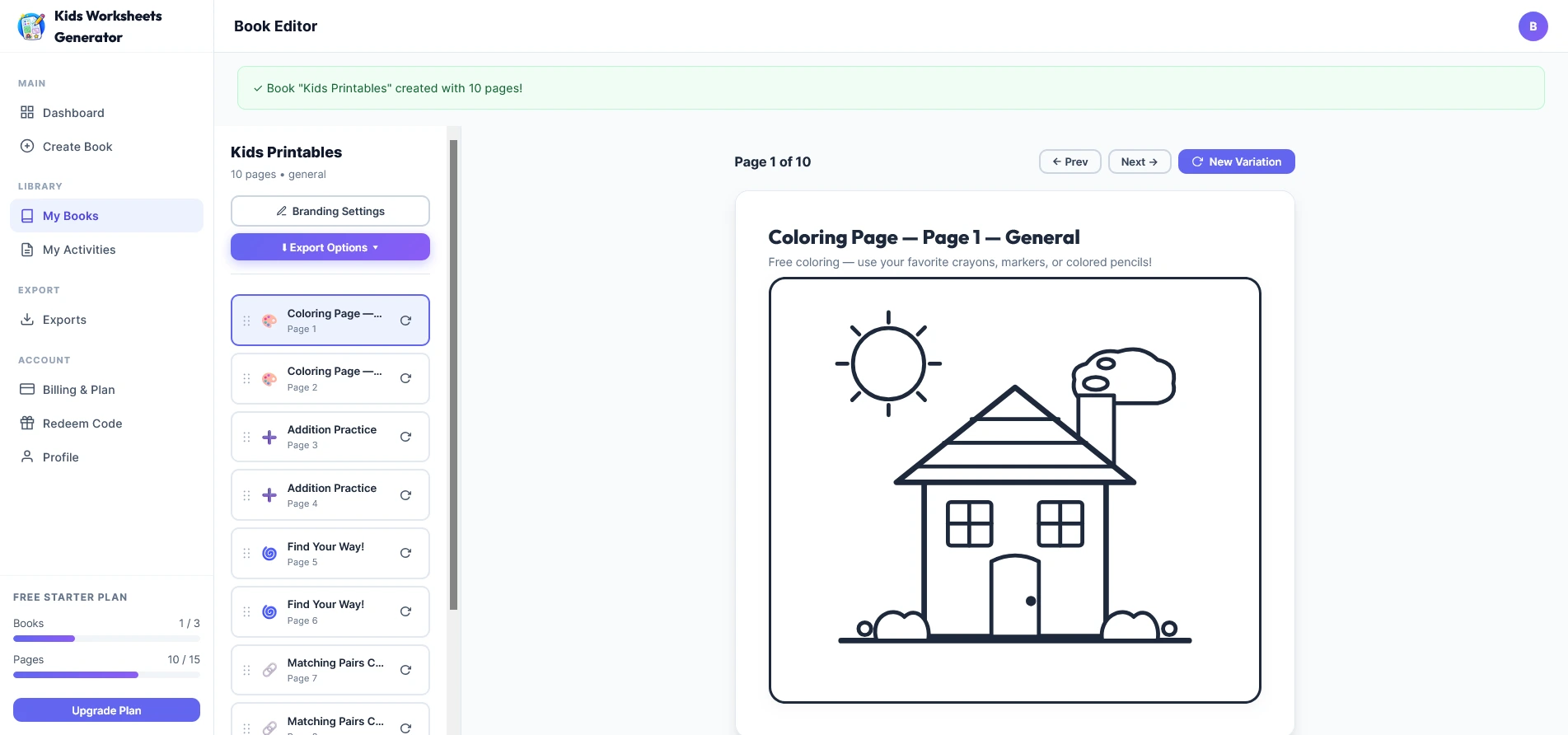
- Arrange in Book Builder: Compile individual letter sheets into an organized 26-page or 52-page workbook with student header fields.
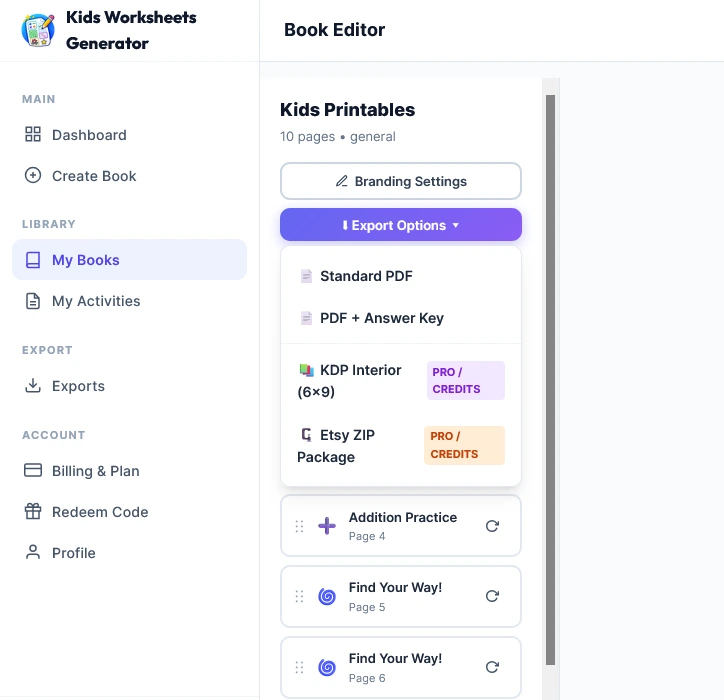
- Export High-Resolution Vector PDFs: Download print-ready 300 DPI PDF files formatted for standard 8.5 x 11 inch Letter or A4 double-sided printing.
Setting Up a Reusable Daily Letter Tracing Center in Classroom or Home
Make handwriting practice sustainable and economical with these practical classroom tips:
- Dry-Erase Pocket Sleeves: Insert printed tracing sheets into heavy-duty plastic sleeves to create reusable wipe-clean morning tubs.
- Use Ergonomic Triangular Crayons: Triangular writing tools naturally prevent hand cramping and encourage a standard 3-finger tripod grasp.
- Automated Solution Stations: Print included automated answer keys and post them at your literacy station so students can self-check their work.
Final Verdict
Who should use this tool?
Kids Worksheets Generator is the definitive software for preschool teachers, kindergarten prep specialists, and homeschooling parents looking to create customized letter tracing printables. Its robust handwriting engine, Book Builder, and instant vector PDF exports turn curriculum creation into an effortless, rapid process.
Overall Rating: 4.9 / 5
Frequently Asked Questions
At what age should preschoolers start tracing letters?
Most children are ready for structured letter tracing between ages 3.5 and 4, after they have mastered basic pre-writing lines like straight strokes and circles.
How many lines of letter tracing should a preschooler do per day?
Two to three lines of guided tracing followed by one line of independent writing (approx. 5 to 10 minutes daily) is ideal to prevent finger fatigue.
What font style is best for preschool letter tracing?
Clean primary fonts featuring standard ball-and-stick or D'Nealian letterforms with dotted midline guidelines provide the clearest visual structure for early writers.
Can I export complete 26-letter alphabet workbooks as a single PDF?
Yes. The Book Builder inside Kids Worksheets Generator compiles all letters from A to Z into an organized, print-ready PDF booklet with cover pages and page numbers.
How do I stop my child from reversing letters like b and d?
Use visual memory cues (such as "b has a belly in front, d has a diaper in back") and highlight starting dots so children initiate strokes from the correct guideline position.
Generate Custom Letter Tracing Worksheets Today
Design engaging alphabet handwriting pages, custom name tracing sheets, and pre-k workbooks in seconds.
Try Kids Worksheets Generator For Free →Instant access to handwriting generators, Book Builder, and print-ready PDF downloads.