ABC Coloring Pages: Free Printable Alphabet Coloring Activities (2026 Guide)
A comprehensive guide to using ABC coloring pages for preschool phonics and letter recognition. Explore bubble letter outlines, beginning sound art, and custom coloring books.
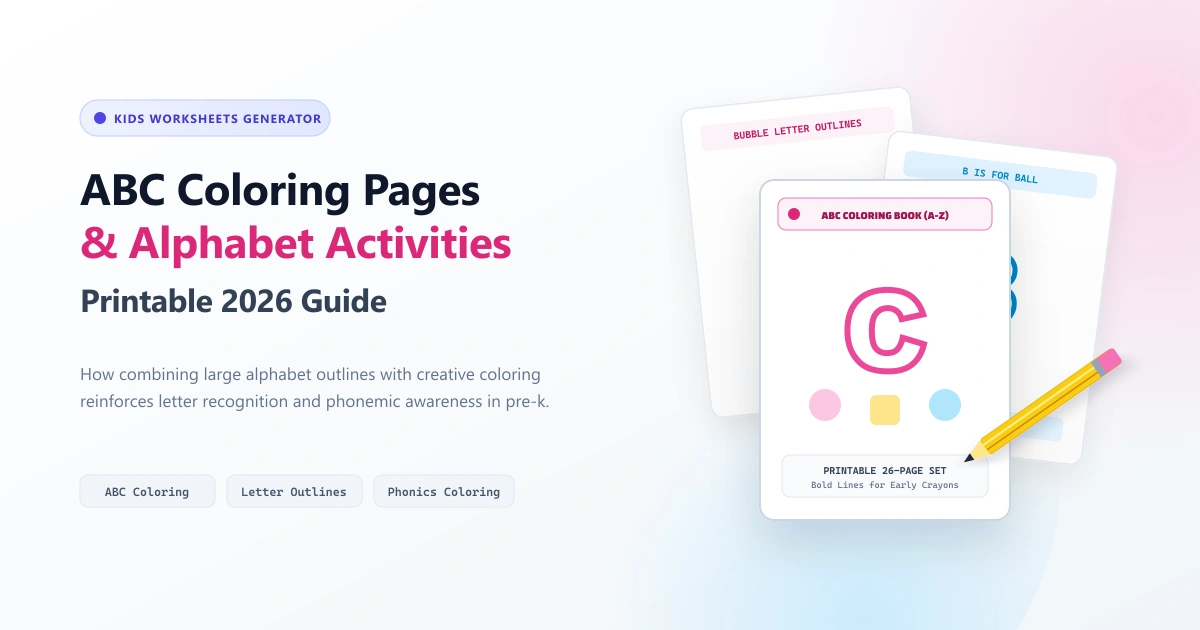
ABC coloring pages combine large-format letter outlines, recognizable beginning sound illustrations, and creative sensory art to establish early alphabet recognition and fine motor control for preschool and toddler-age learners. In 2026, early literacy and motor development research demonstrates that children aged 2 to 5 who engage in regular alphabet coloring activities identify letter shapes up to 42% faster than peers relying solely on passive screen media. By physically coloring inside the contours of uppercase and lowercase letters, children develop the tactile hand memory, pencil grip control, and phonemic sound associations essential for future reading and handwriting success.
In this article
- How Do ABC Coloring Pages Bridge Early Art and Phonics Learning?
- What Makes an Effective Educational Alphabet Coloring Page?
- How to Structure a 26-Letter Preschool Coloring Curriculum
- How Can Educators Generate Custom Alphabet Coloring Books in Minutes?
- What Are the Best Paper Weights and Art Supplies for Preschool Coloring?
- Final Verdict
- Frequently Asked Questions
How Do ABC Coloring Pages Bridge Early Art and Phonics Learning?
Toddlers and young preschoolers rarely sit still for traditional repetitive letter tracing drills. Coloring provides an accessible, low-pressure entry point into early literacy because it leverages a child's natural desire to explore colors and textures.
Educational researchers identify four key cognitive and motor benefits achieved through routine alphabet coloring practice:
- Tactile Letter Boundary Exploration: Filling the interior space of a large bubble letter "C" or "S" teaches small hands how the letter curve flows before they ever attempt fine line tracing.
- Phonemic Picture Association: Coloring an illustration of an "Alligator" directly beside an uppercase "A" reinforces the initial /a/ sound through multi-sensory visual recall.
- Pincer Grip and Wrist Stability: Controlling crayons inside both large letter boundaries and smaller picture segments develops the finger pressure control needed for pencil writing.
- Color Discrimination and Focus: Choosing distinct colors for uppercase letters, lowercase pairs, and background objects encourages concentration and spatial awareness.
Create customizable 26-page ABC coloring books, bubble letter printables, and phonics activity pages in seconds.
What Makes an Effective Educational Alphabet Coloring Page?
Not all coloring pages support early literacy equally. Generic clip-art pages with thin, intricate lines can frustrate young toddlers whose fine motor control is still developing.
High-quality educational ABC coloring worksheets feature specific structural design elements tailored for early learners:
| Design Element | Pedagogical Purpose | Best Implementation Method | Target Age Group |
|---|---|---|---|
| Jumbo Bubble Letters | Letter boundary exploration with crayons or finger paint | Large 100pt+ outlines with 3pt thick black borders | Toddlers & Nursery (Ages 2 to 3) |
| Paired Phonics Objects | Immediate phoneme-grapheme sound reinforcement | 1 to 2 clear illustrations (e.g., Bear, Banana for B) | Pre-K (Ages 3 to 4) |
| Tracing + Coloring Hybrid | Transition from creative coloring to guided handwriting | Coloring header with 2 lines of dotted tracing at bottom | Kindergarten (Ages 4 to 5+) |
| Patterned Zentangle Letters | Advanced focus, relaxation, and intricate grip control | Segmented geometric fills inside letter shapes | Kindergarten & 1st Grade (Ages 5 to 7) |
How to Structure a 26-Letter Preschool Coloring Curriculum
To maximize phonics retention, teachers and homeschool parents should introduce alphabet coloring sheets in structured thematic cycles rather than all at once.
A proven 4-week preschool alphabet coloring sequence:
- Week 1: Straight Line Letters (L, T, I, H, F, E): Focus on vertical down-strokes and horizontal crossbars with simple object coloring (Lion, Tiger, House).
- Week 2: Curved Letters (C, O, Q, G, S, U): Guide circular and wave crayon motions with rounded objects (Cat, Octopus, Sun).
- Week 3: Straight & Curved Combinations (D, P, B, R, J): Practice top-down stems paired with rounded lobes (Duck, Penguin, Butterfly).
- Week 4: Diagonal Slash Letters (A, V, W, X, Y, Z, K, M, N): Master sharp angle turns with dynamic illustrations (Apple, Volcano, Zebra).
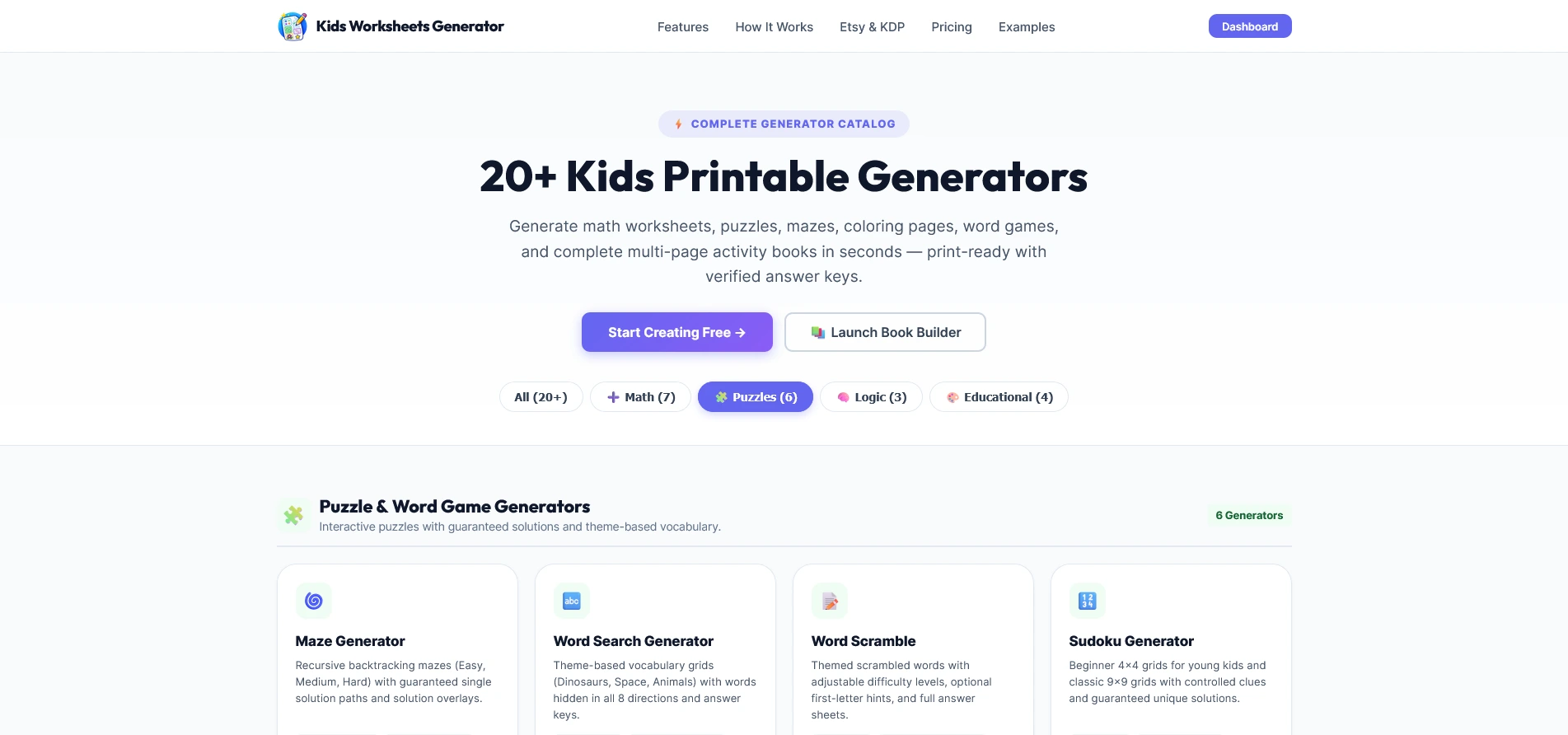
Create complete 26-page alphabet coloring books, phonics worksheets, and custom preschool bundles in minutes.
How Can Educators Generate Custom Alphabet Coloring Books in Minutes?
Instead of searching through countless unformatted Pinterest PDFs, digital generator software allows you to compile unified 26-page alphabet coloring books with consistent typography and clean print margins.
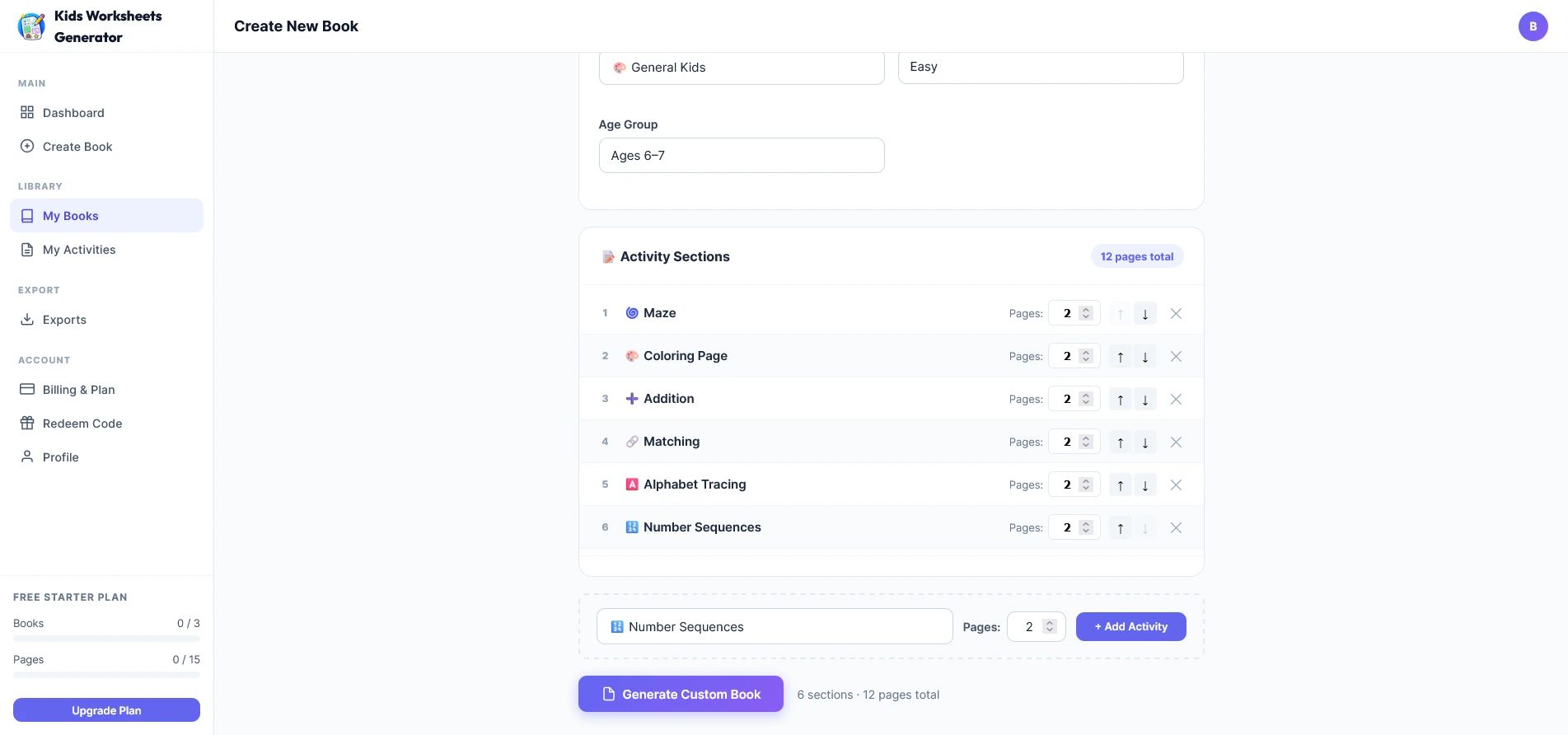
The automated coloring book workflow:
- Choose Letter Outline Styles: Select bold bubble fonts, hollow block letters, or dotted outline formats for tracing.
- Select Phonics Illustration Themes: Choose thematic graphics matching your classroom science or seasonal units.
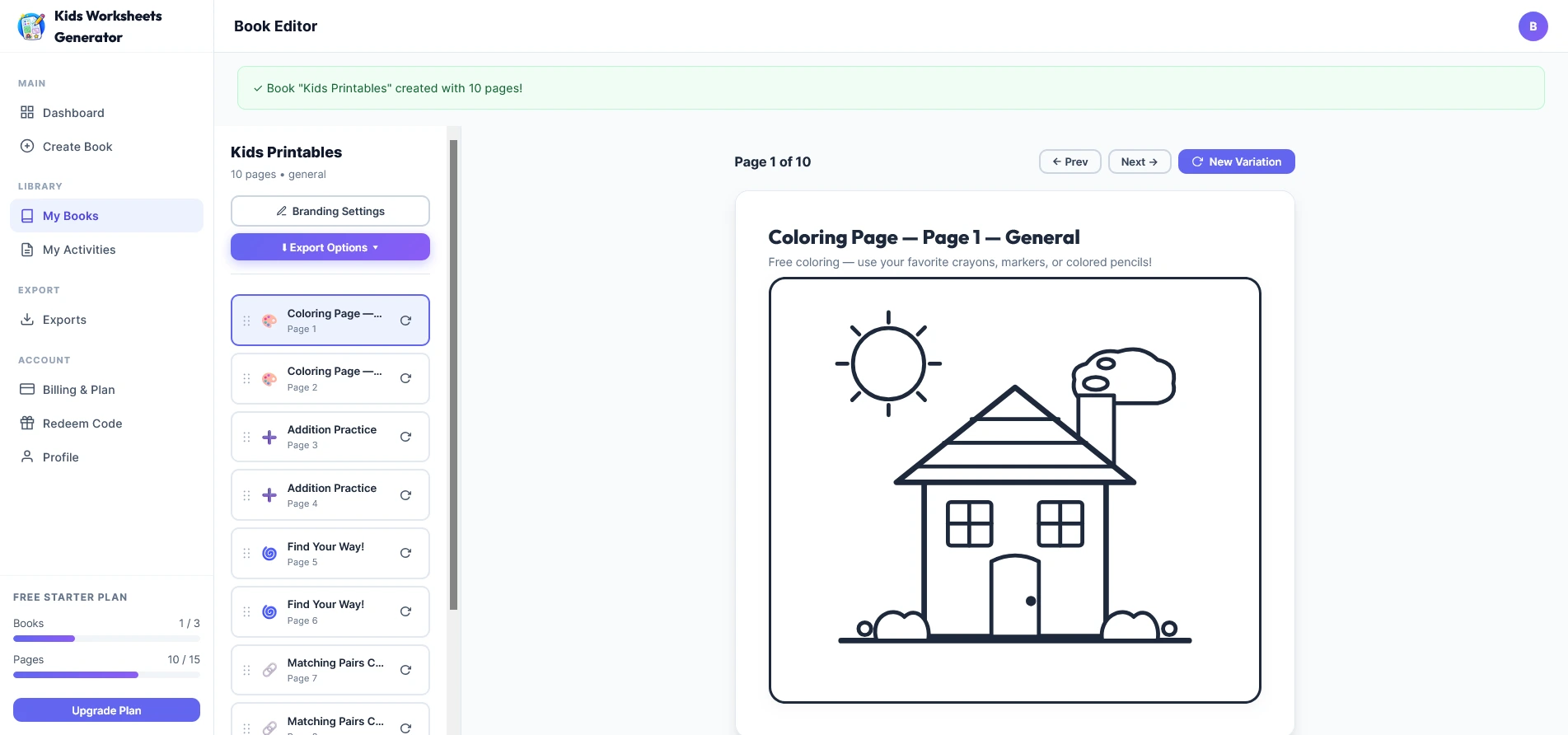
- Arrange in Book Builder: Combine individual letter coloring pages into full 26-page or 52-page booklets with custom cover designs.
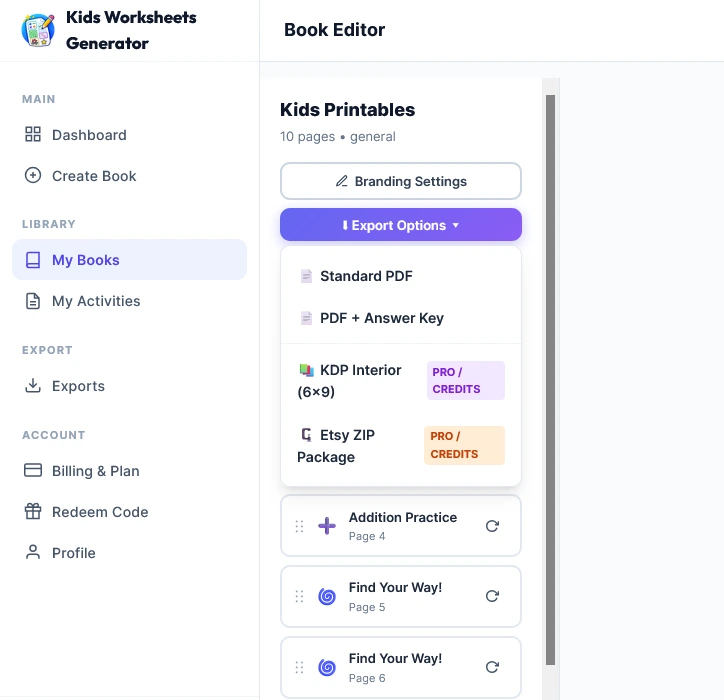
- Download Vector PDF: Export clean 300 DPI vector PDF files formatted for standard 8.5 x 11 inch Letter or A4 paper.
What Are the Best Paper Weights and Art Supplies for Preschool Coloring?
Selecting appropriate physical materials prevents frustration and torn pages during preschool art time:
- Print on 28 lb to 65 lb Cardstock: Standard 20 lb copy paper easily saturates and tears under wet washable markers. Heavier cardstock provides a firm, bleed-resistant drawing surface.
- Ergonomic Triangle Crayons: Non-roll triangular crayons naturally position toddler fingers into a 3-point tripod grip without rolling off desks.
- Dot Markers (Bingo Daubers): For younger 2-year-olds, dot markers allow children to fill letter bubble outlines with gentle stamping motions.
Final Verdict
Who should use this tool?
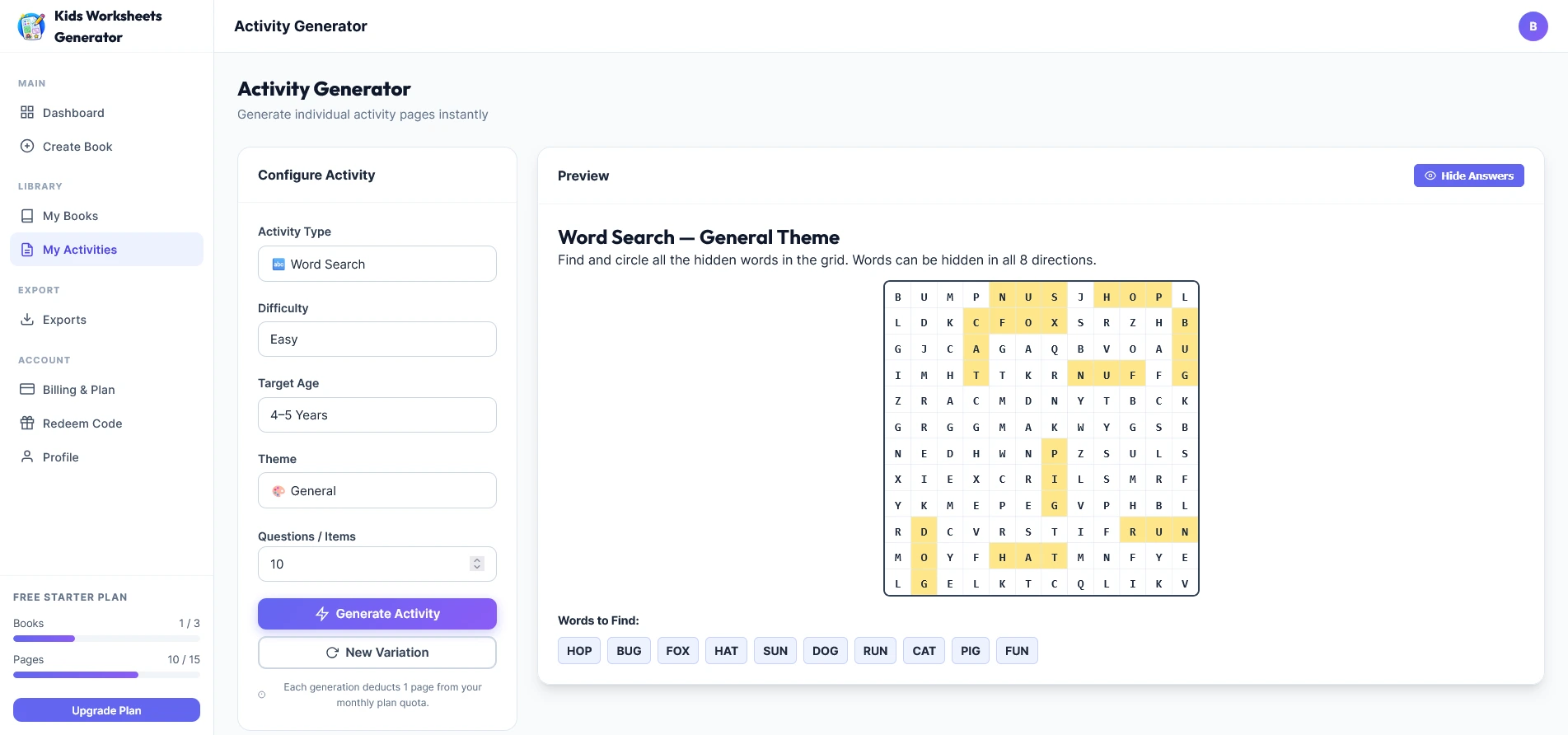
Kids Worksheets Generator is the premier platform for preschool teachers, daycare coordinators, homeschool families, and Etsy/KDP creators looking to produce high-quality ABC coloring books and phonics printables. Its rich illustration library, customizable bubble fonts, and automated Book Builder make curriculum creation fast, engaging, and professional.
Overall Rating: 4.9 / 5
Frequently Asked Questions
At what age can toddlers start using ABC coloring pages?
Toddlers can begin gross-motor letter coloring around age 2 to 2.5 years using jumbo crayons, dot markers, or finger paint inside large bubble letter outlines.
Do ABC coloring pages help prepare children for kindergarten reading?
Yes. Pairing letter visual outlines with beginning sound pictures builds phonemic awareness and grapheme recognition, which are two foundational predictors of kindergarten reading readiness.
What is the difference between alphabet coloring pages and letter tracing sheets?
Alphabet coloring pages focus on creative visual boundary exploration and phonics picture association, while letter tracing sheets focus on precise directional handwriting strokes along dotted baseline guidelines.
Can I export complete 26-letter ABC coloring books as a single PDF?
Yes. The Book Builder inside Kids Worksheets Generator allows you to compile all letters from A to Z into a single, unified PDF file ready for double-sided booklet printing.
What are the best art supplies for preschool alphabet coloring?
Jumbo beeswax crayons, triangular washable markers, and water-based dot daubers work best because they provide bold color payoff with minimal hand pressure.
Create Your Custom ABC Coloring Book Today
Design beautiful 26-letter coloring pages, phonics activity packets, and printable workbooks in seconds.
Try Kids Worksheets Generator For Free →Instant access to 20+ activity modules, Book Builder, and high-resolution PDF downloads.